
In Renderings of New Perceptions
In this article, art historian and New York City correspondent Osvaldo Martinez Abreu investigates the ongoing creations of Brooklyn based artist, Carol Bove. Spanning over 25 years of work, The Solomon R. Guggenheim's self titled survey on Bove transports viewers through created realms, rendering new possibilities on seeing our world . "Carol Bove" is on view at The Solomon R. Guggenheim Museum, March 5 - August 2, 2026.
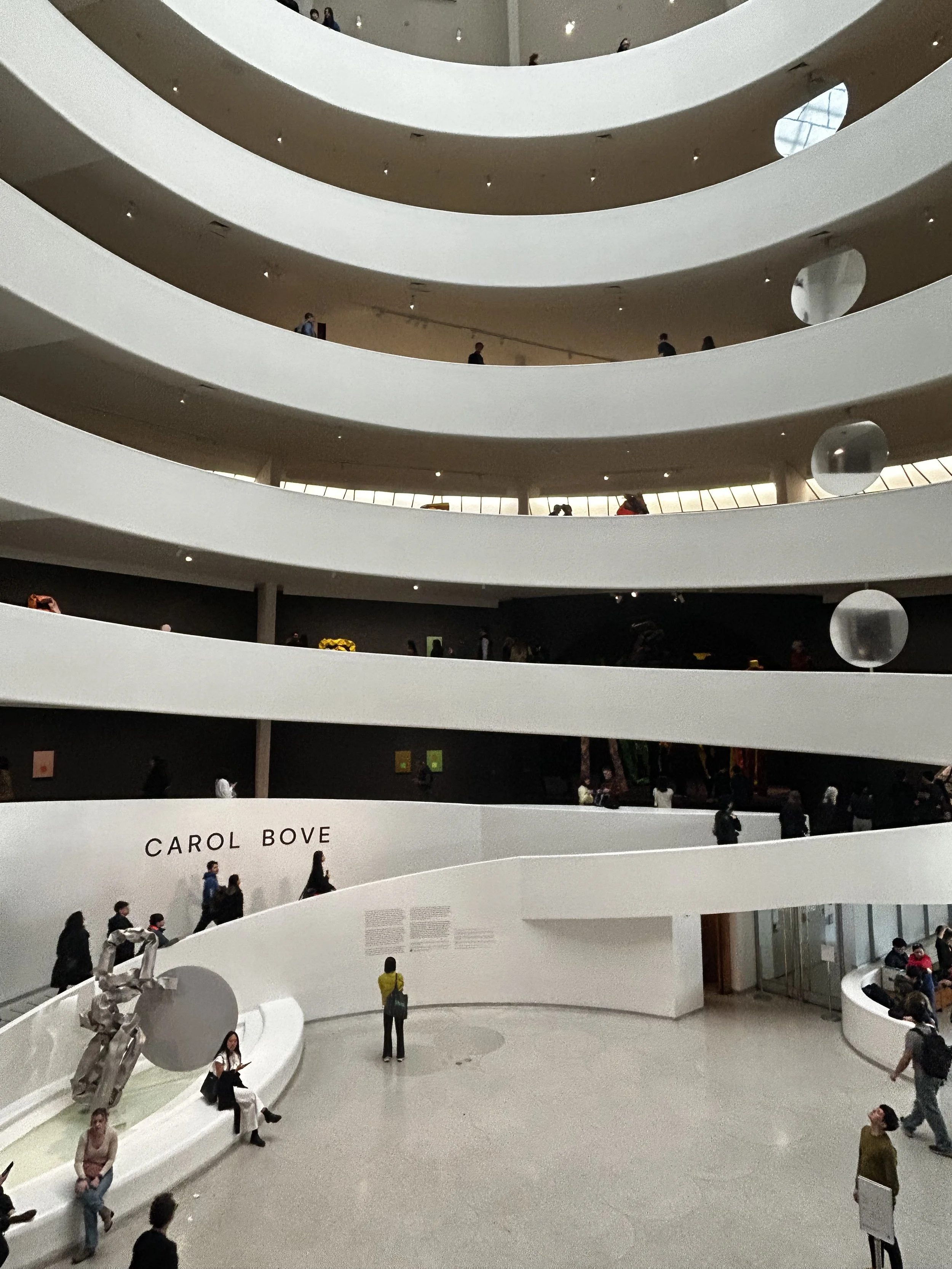
Installation View: Carol Bove, The Solomon R. Guggenheim Museum
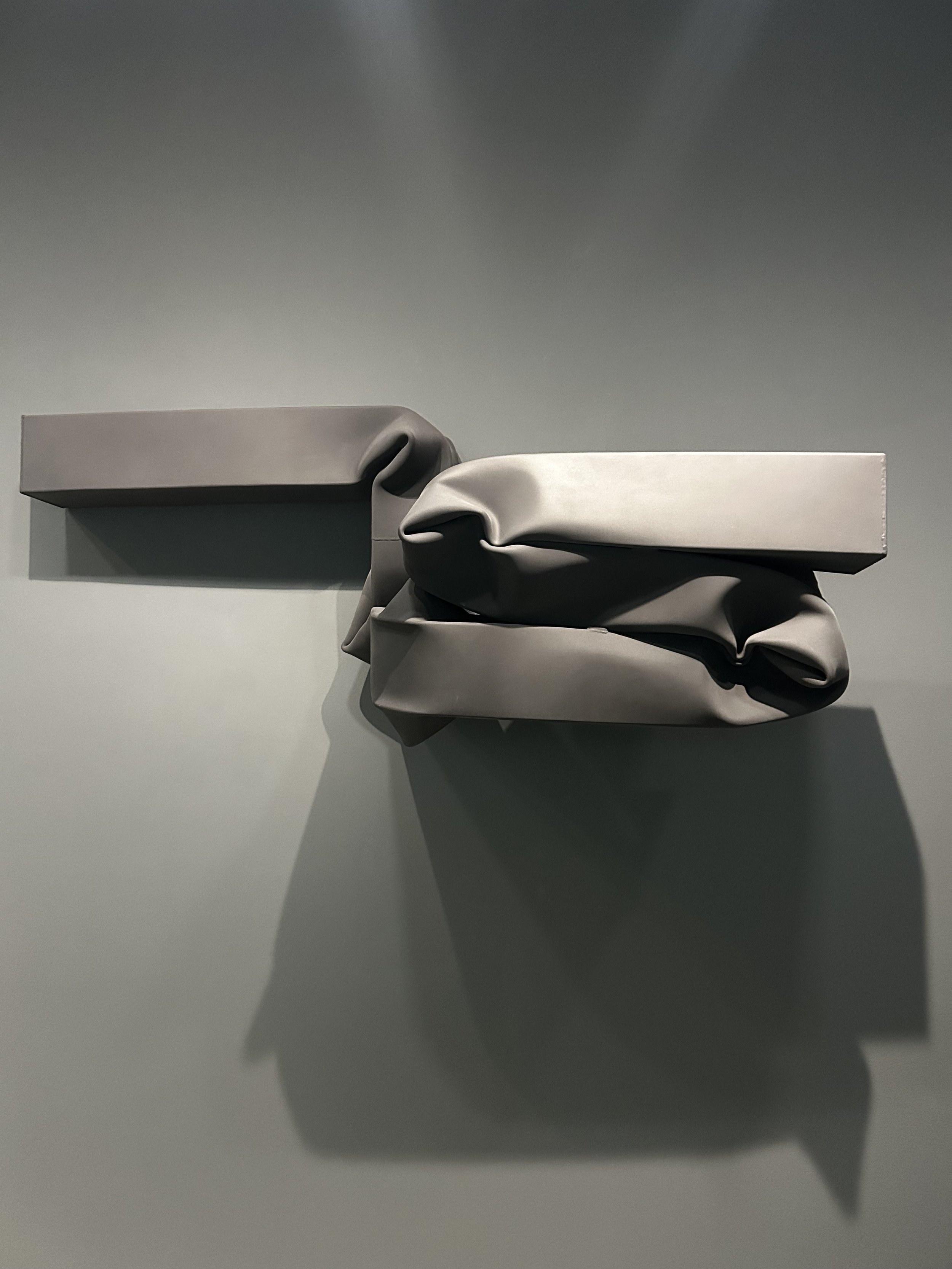
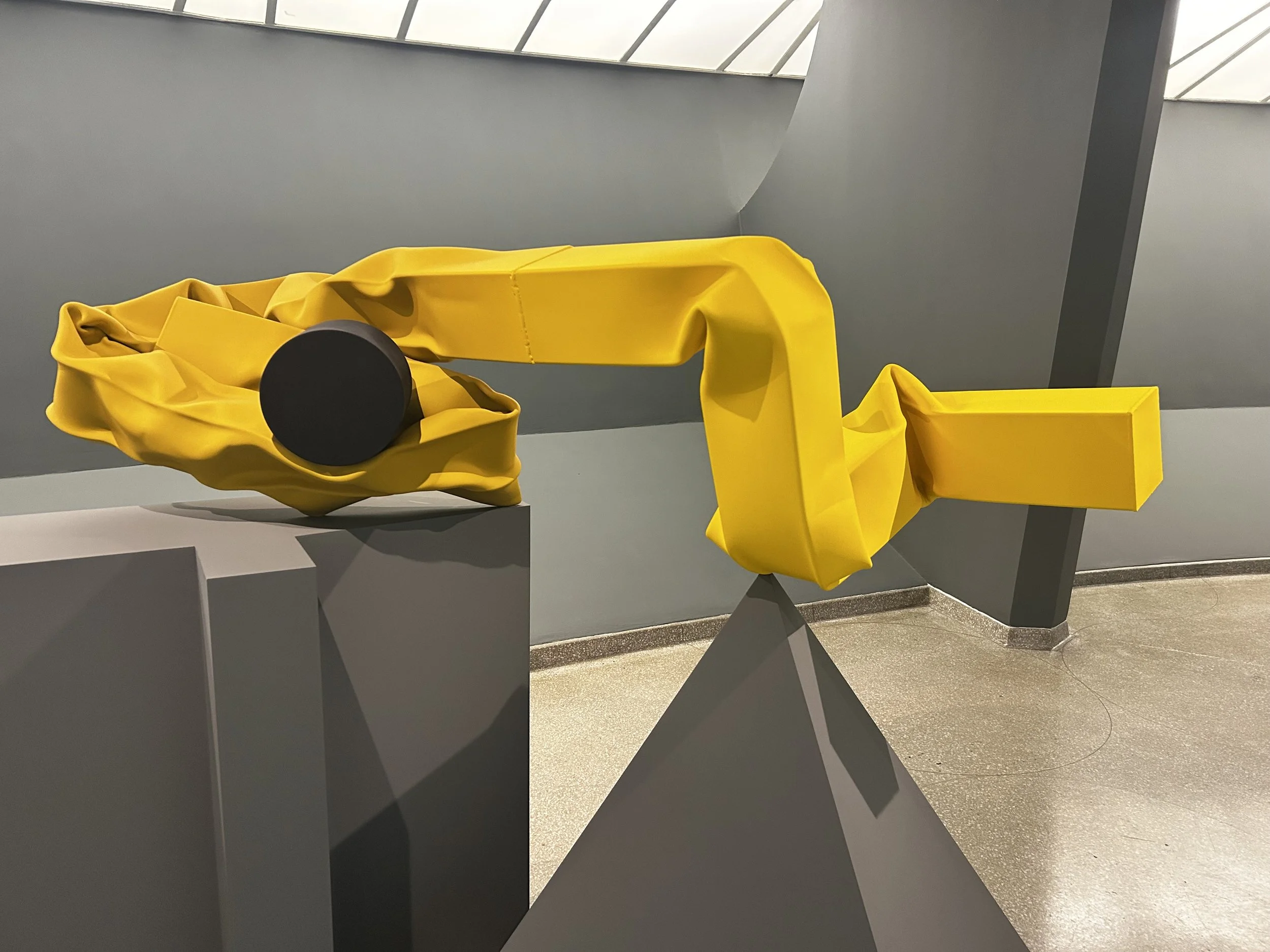
In a menagerie of forms, textures, and colors, Carol Bove’s (American, born Switzerland, 1971) self-titled exhibition at The Solomon R. Guggenheim Museum unfolds a landscape of introspection. Through this varied visual language the exhibition reconfigures the museum’s physical boundaries, inviting viewers to navigate and reflect. As Bove’s first museum survey, the curated pieces spiral through the museum's rotunda, highlighting over 25 years of artistic practice. The works span various mediums, including assemblages of paper and books, ink drawings, and large-scale steel sculptures. Geometric motifs appear in meditative, rhythmic forms, such as moonlike aluminum disks forming a vertical column—an almost spine-like addition that holds the rotunda in place. This follows anodized aluminum wall panels, in the signature symmetrical composition of Bove, inlaid in vibrant colors. This consistent use of form establishes a dialogue between Bove’s practice and that of earlier abstractionists, such as Hilma af Klint, Vasily Kandinsky, and Harry Smith. Bove’s intricate maneuvering of material transformation, through ongoing experimentation, has come to demonstrate her ability in rendering new ways of seeing. This is expressed through intentional transformation of how we read weight, surface, and form. At the forefront of contemporary art, Bove consistently crafts new lenses for rendering possibilities in abstraction.
“Bove’s intricate maneuvering of material transformation, through ongoing experimentation, has come to demonstrate her ability in rendering new ways of seeing.”
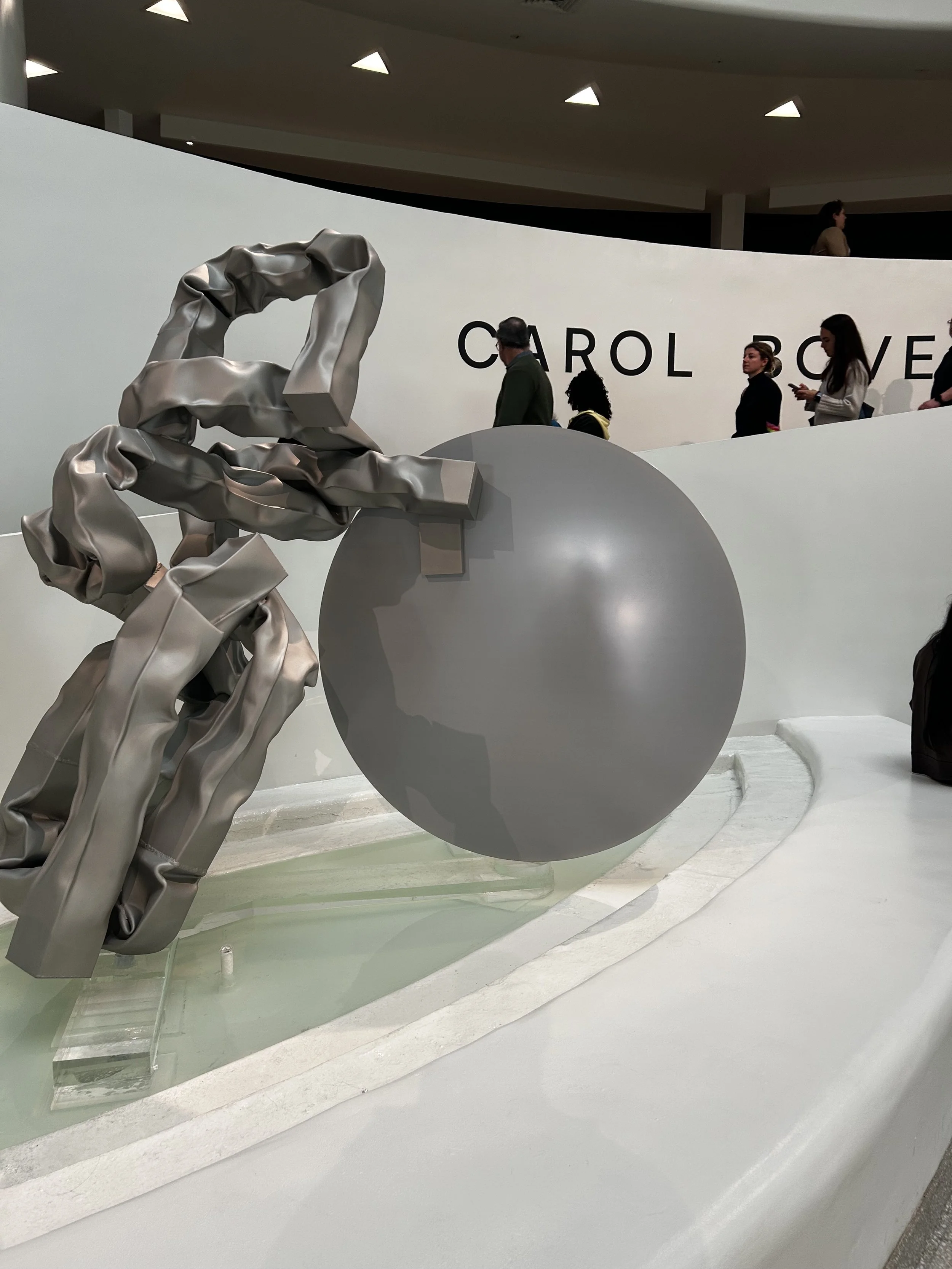
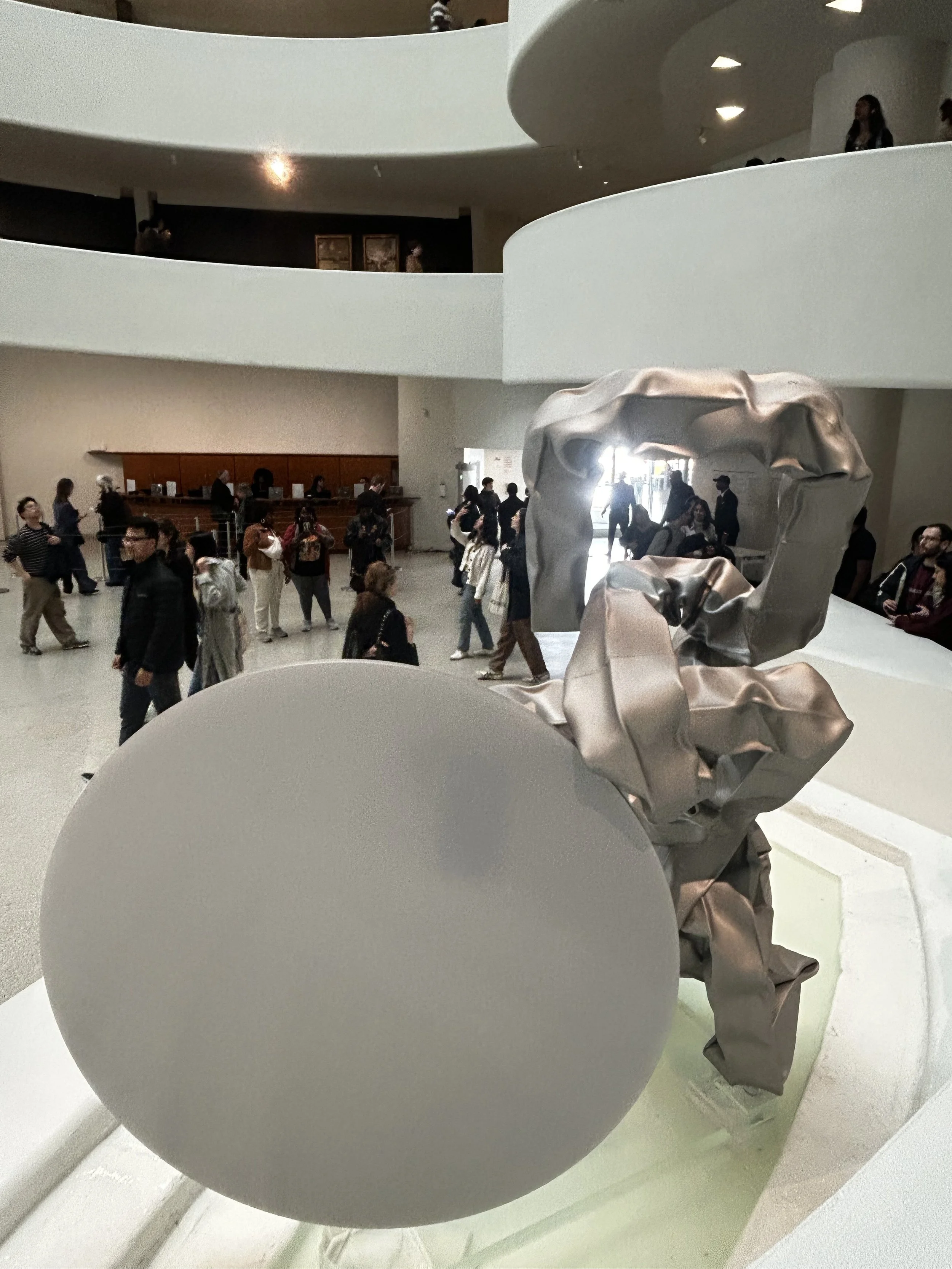
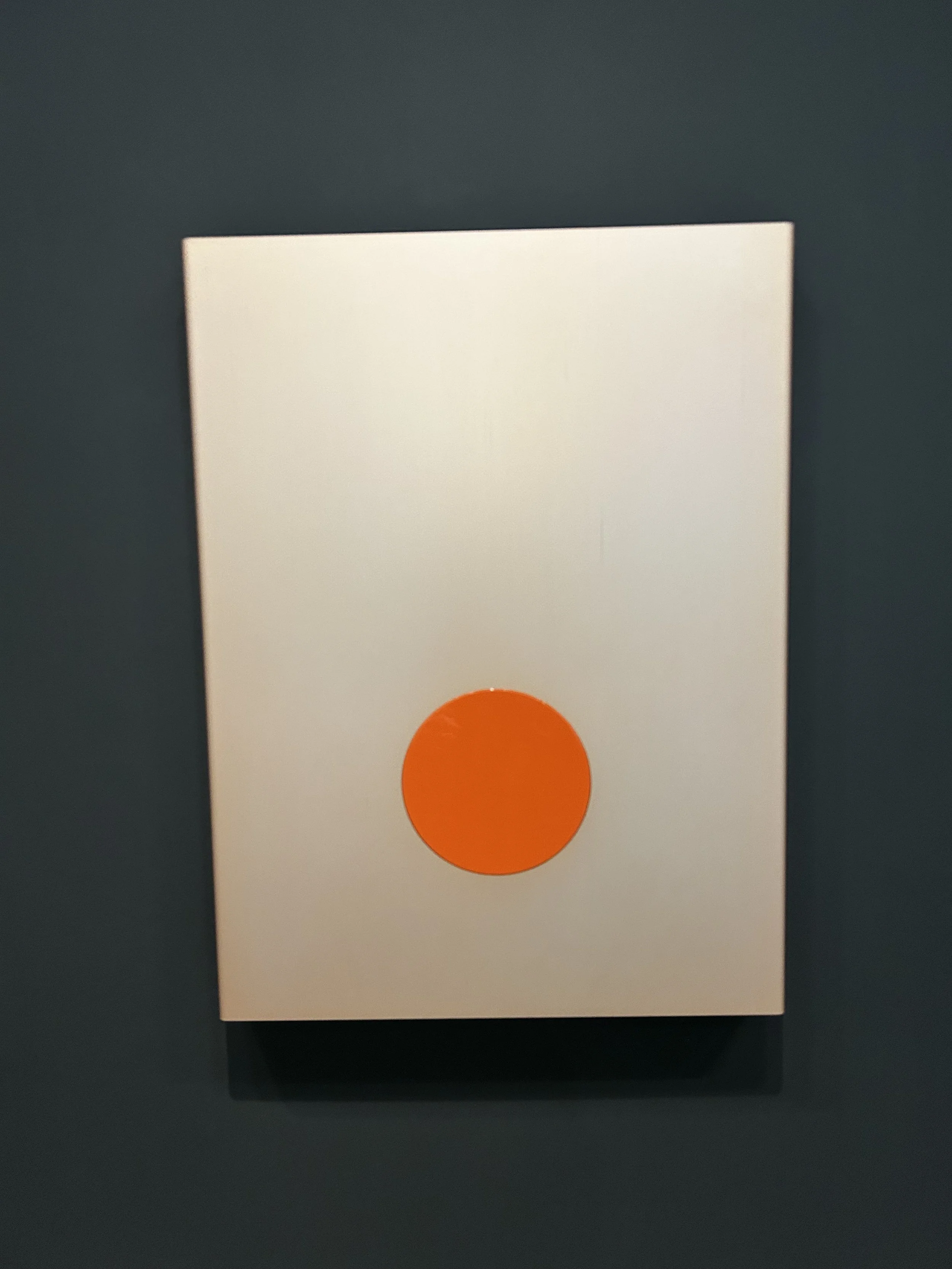
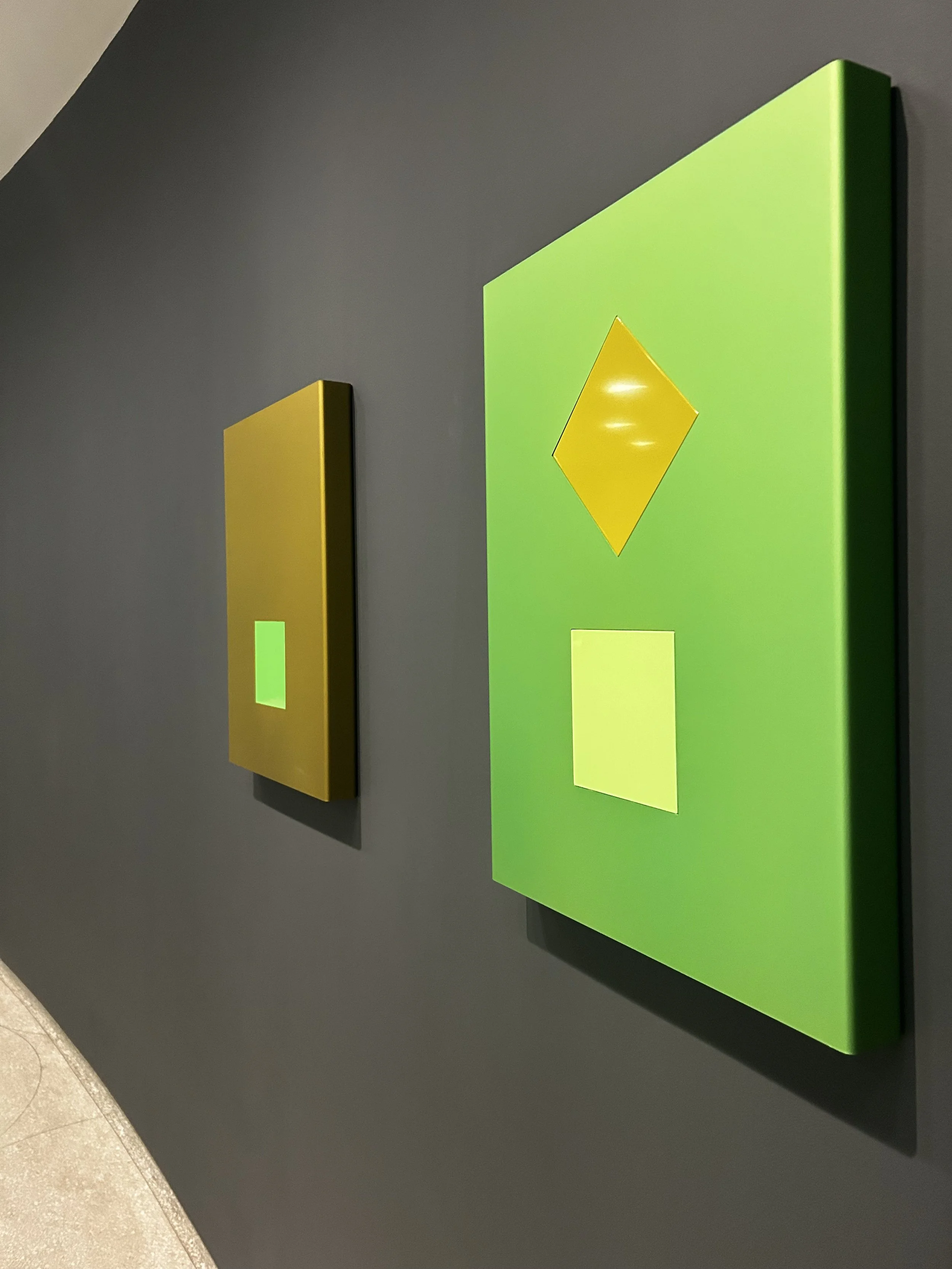
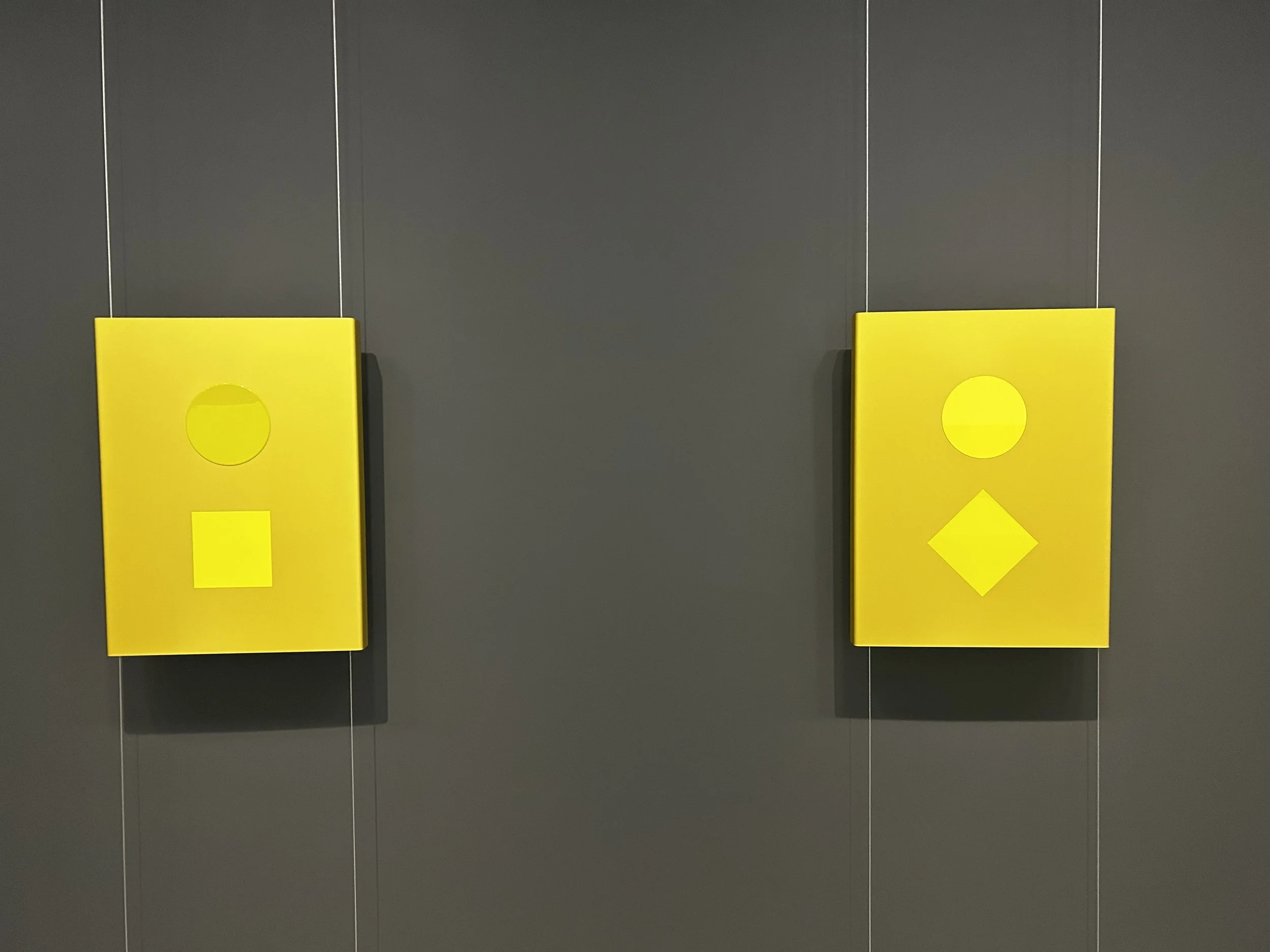
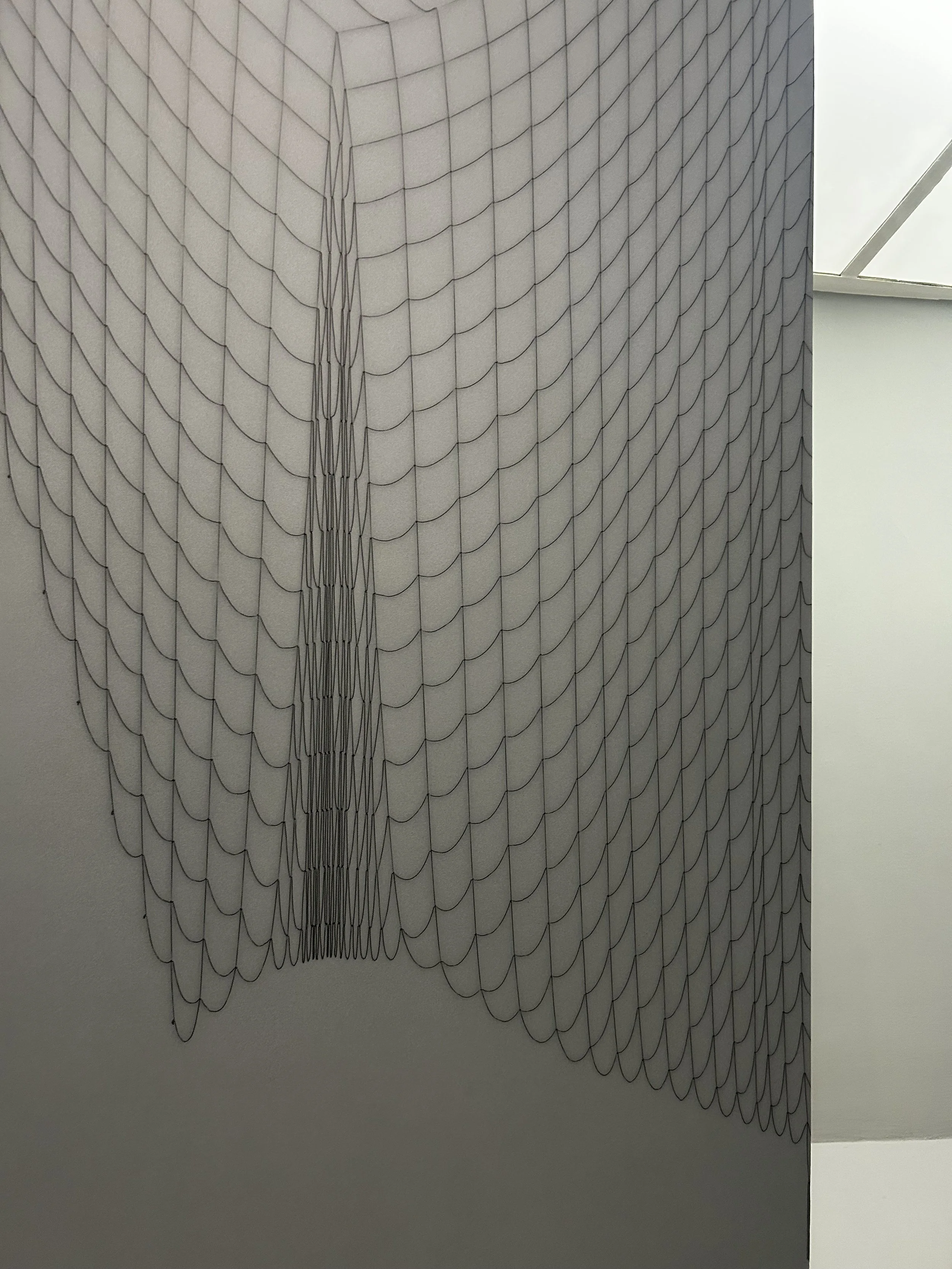
Within a prismatic mosaic of selected works, Bove’s survey weaves through ideas of alternating perceptions. The survey argues that perception is not fixed, but shifting and plural. There is no singular or correct interpretation; there are only the many, garnered from one’s imagination. Bove directly engages with the viewers by altering perceived materials and known works of historical forms. In this, Bove grants these malleable forms new structures of identity by reconfiguring surfaces, colors, scales, and shapes. In a constant state of experimentation, out of her Brooklyn studio, Bove has created an awareness that welcomes questioning what can be. Presented in reverse chronological order, from bottom to top, the newest soaring sculptures at the lower level create a canopy of artistic development, leading up to drawings and installations from the 2000s at the top. As it swirls upwards, there is an intentional visual reflection of continual development, from monumental sculptural compositions to lighter, more delicate pieces, including soft ink drawings, assemblages of papers, and constructions of threads and feathers. There is no sense of singularity, and welcomed is the perception of time and its effect. Throughout the levels, integrated is the effect of time and that of the artist’s hand through constant evolution.
Raised in Berkeley, California, during the 1970s and 1980s, Bove was influenced by experimental art and artists such as Cady Noland, Robert Gober, and Félix González-Torres. She draws from diverse art historical sources to examine the relationship between object and viewer. As Bove notes, these interactions form “the idea of a self-aware sculpture that responds to your interaction, where the embodiment of perception is anticipated and addressed.” She studied photography at New York University, stating,
“[t]he sculpture department wasn’t very welcoming to women…and painting seemed too intimate to do in front of everyone.” After graduation, Bove explored various art practices and developed her first significant body of work. ”
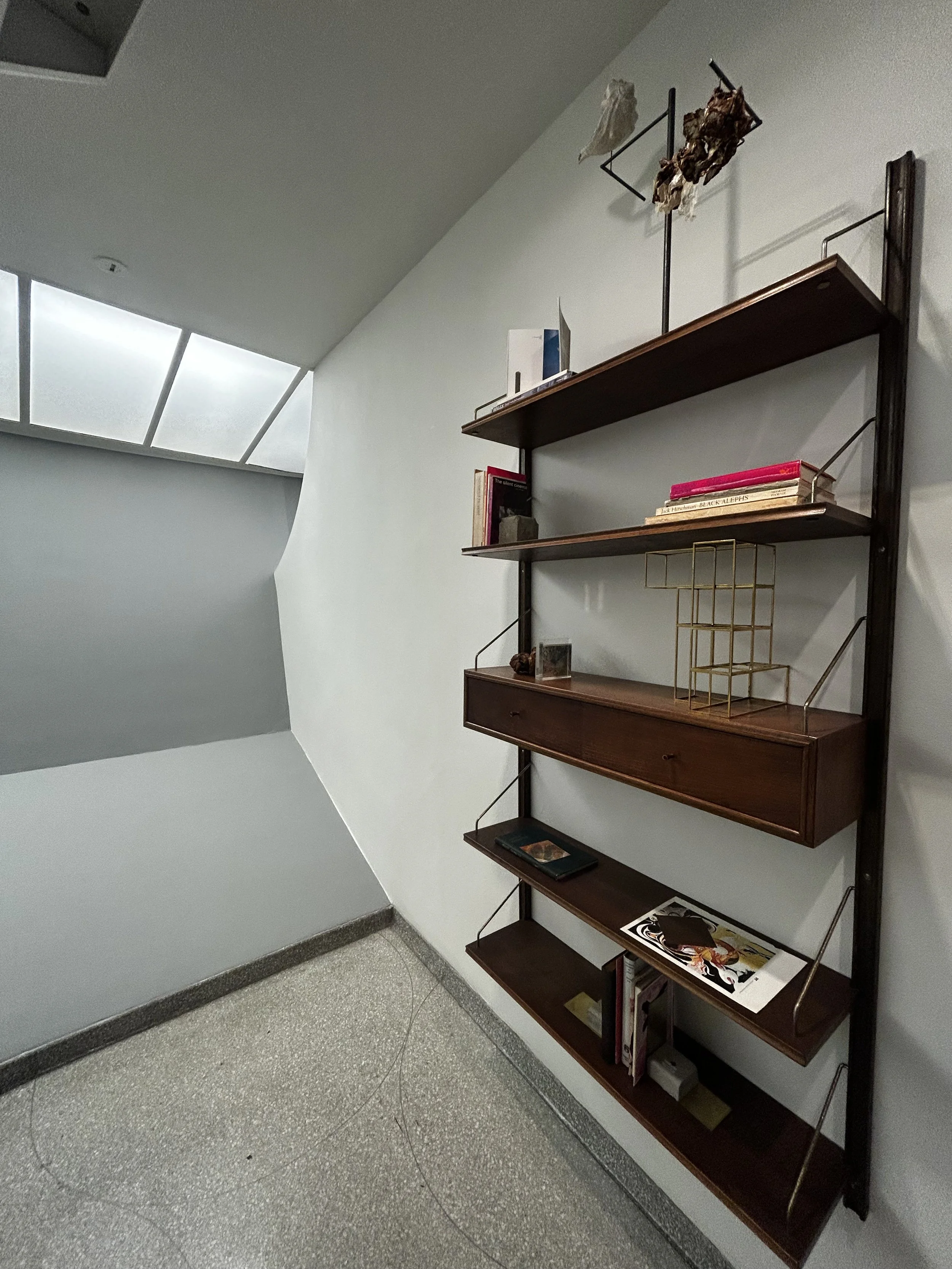
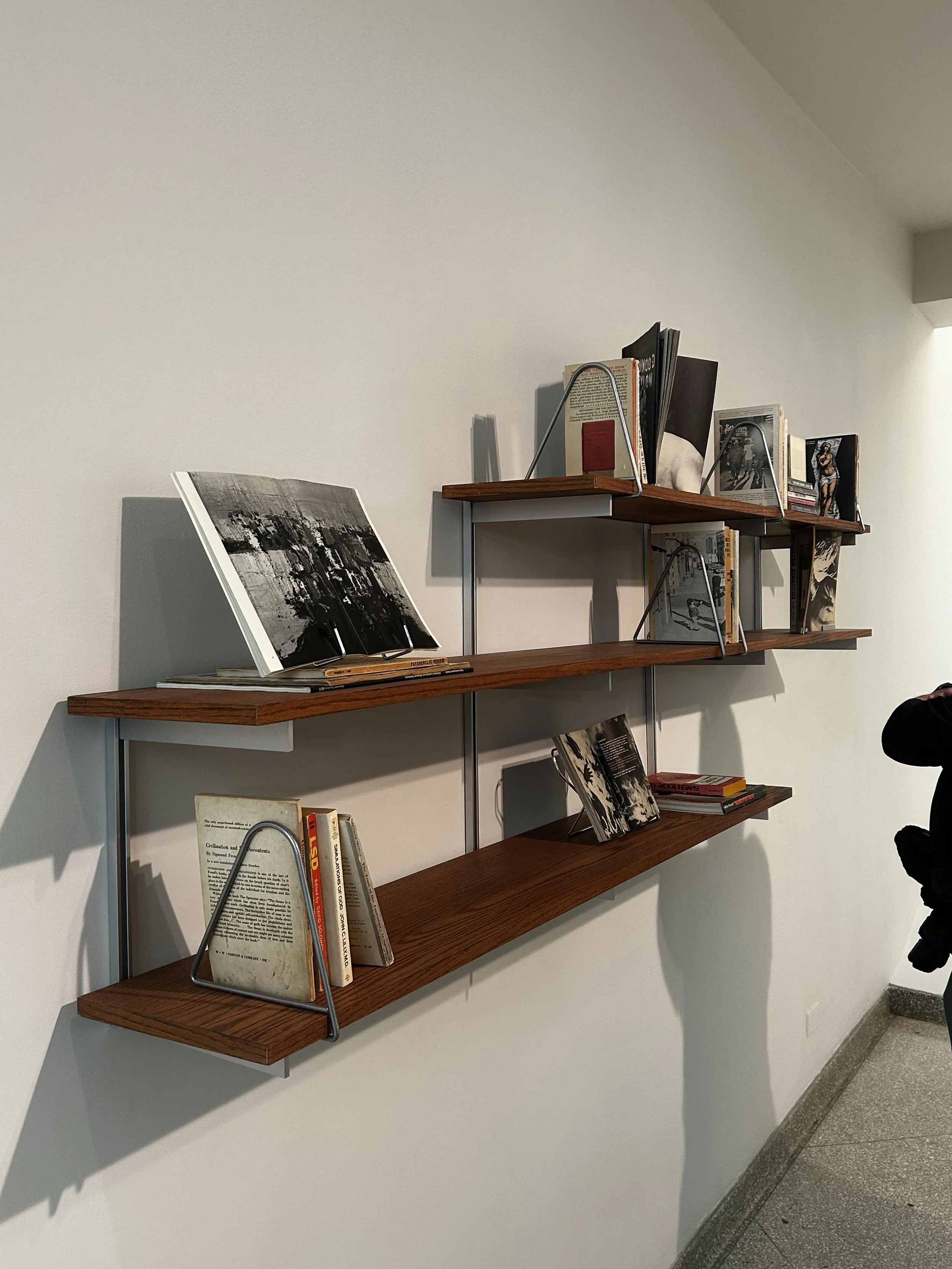
Alongside ink portraits, Bove created a well-known series of shelf assemblages using collected books, magazines, and objects found in the domestic spaces of her youth. Including works by thinkers like William Blake, Laozi, and Ralph Ellison, these collages explore the preservation of images and ideas. Central to Bove’s art is the intentional discovery of grandeur in daily life—a curatorial and archival practice. Early 2000s exhibitions drew from ideals found in ordinary domestic objects. There is an ephemeral quality to everyday objects, creating meaningful vignettes. Bove’s work connects physical space and time, shaping the relationship between object and viewer. Her works form links between presence and art, showing how art merges with everyday life.
“Bove explains, “[s]tyle tends to be disregarded, avoided or disavowed because it’s considered superficial, but I think it’s potent, unavoidable and totally substantive.””
For Bove, space becomes an element of art in the act of creating. The space in which an art piece is placed is integral to its layers of composition that make up its entirety. As such, Bove has transformed the Guggenheim’s famous rotunda space into not just a walkway through her artwork, but is transfigured into a central art piece itself, asking the viewers to ponder on its purpose and how it has changed. As we venture through the upward walkway, the viewers are surrounded by a macroscopic and microscopic world rendered in bright colors, fantastic shapes and forms, and a diverse assemblage of materiality that leaves one pondering its very being. Is it soft? Is it hard? Is it light, or is it greatly heavy? The grandeur of Bove’s survey lies in the act of questioning what is before us.
Central to Bove’s practice is the noting of the relationship between objects and their surrounding space. The rotunda is no longer a simple walk path, but it becomes an enveloping canvas that gives Bove’s work a background setting enclosing it within a certain perspective, but in turn, it also asks the viewer to shift and wonder how the art pieces would change if they were placed in a different space.
“The geometry of space becomes a visual medium of connection and contemplation, as Bove invites viewers through the space to stop and reflect through seating stations and tactile libraries to touch materials from her studio. It is a means of activating perceptions and senses, and asking viewers to ponder how they can be changed. How can one reconnect the way in which we are told to see? ”
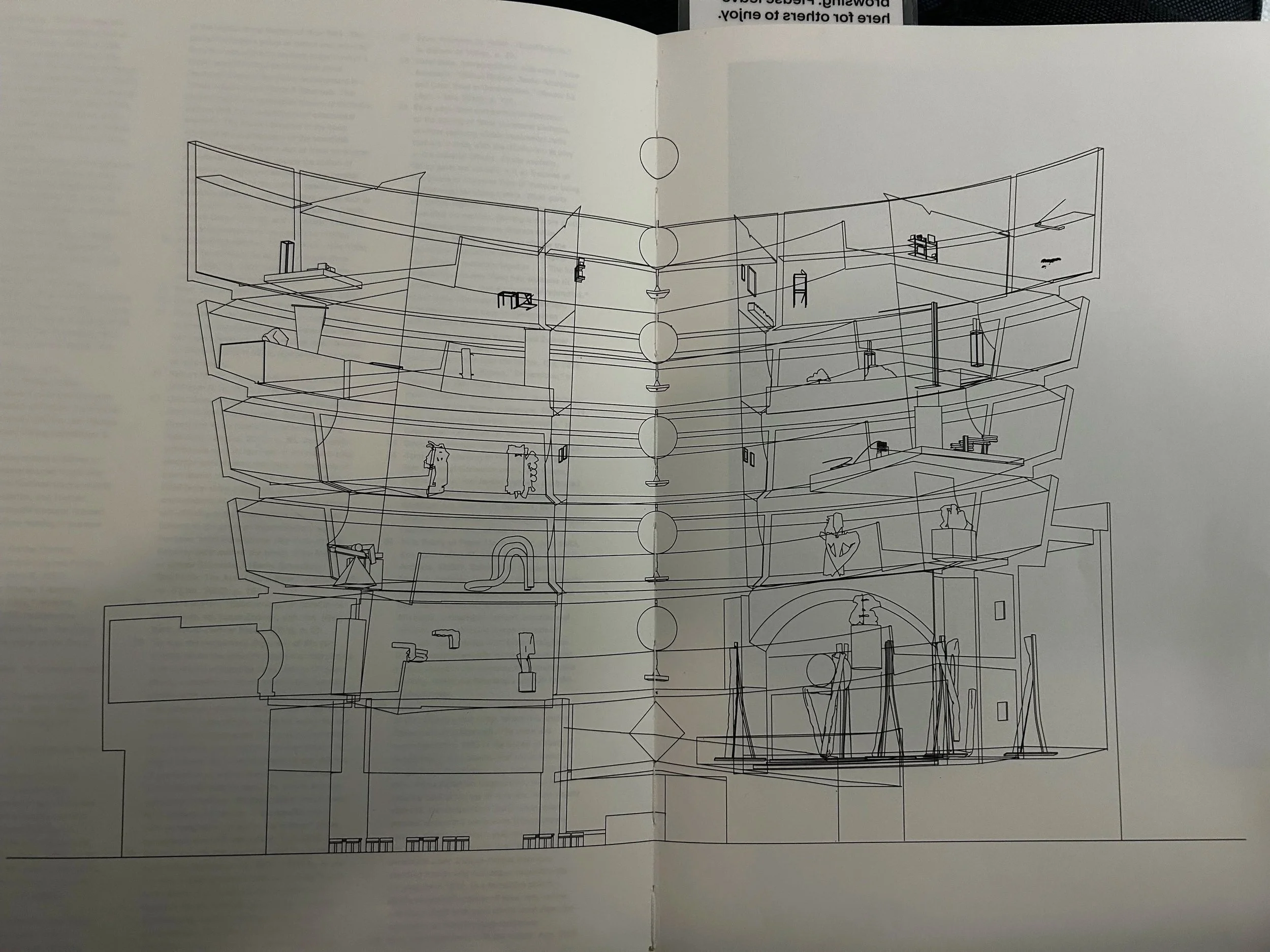
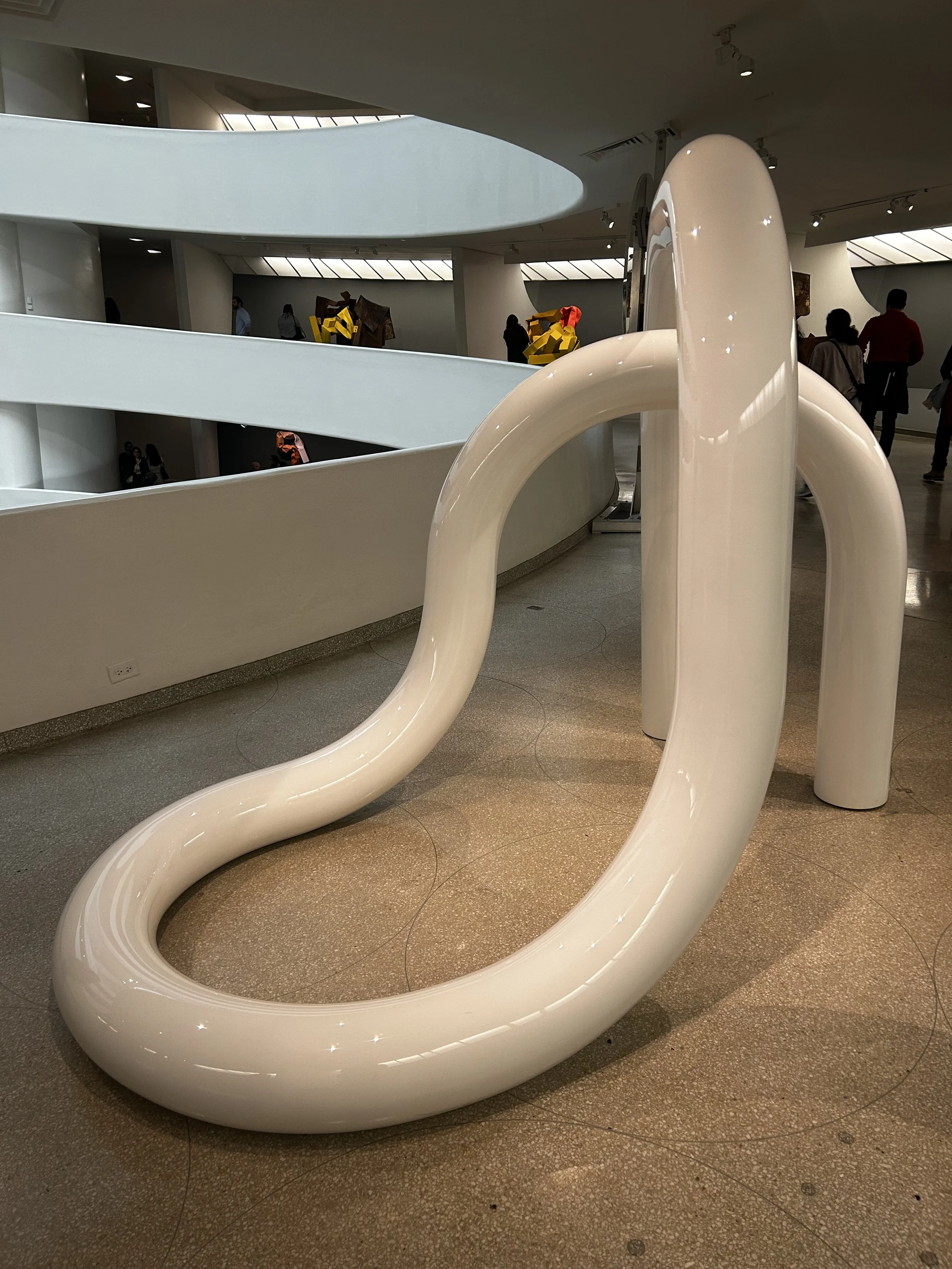
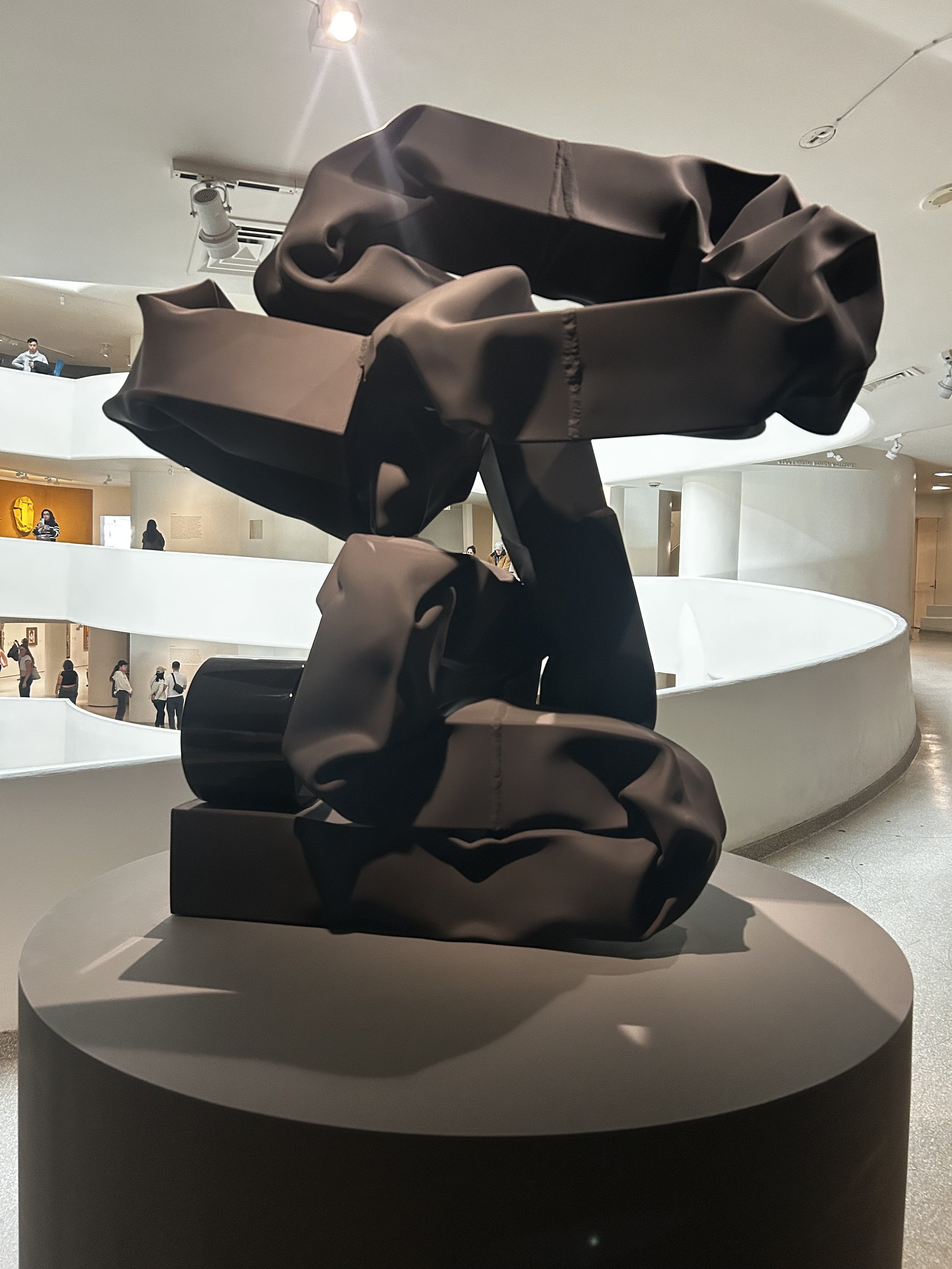
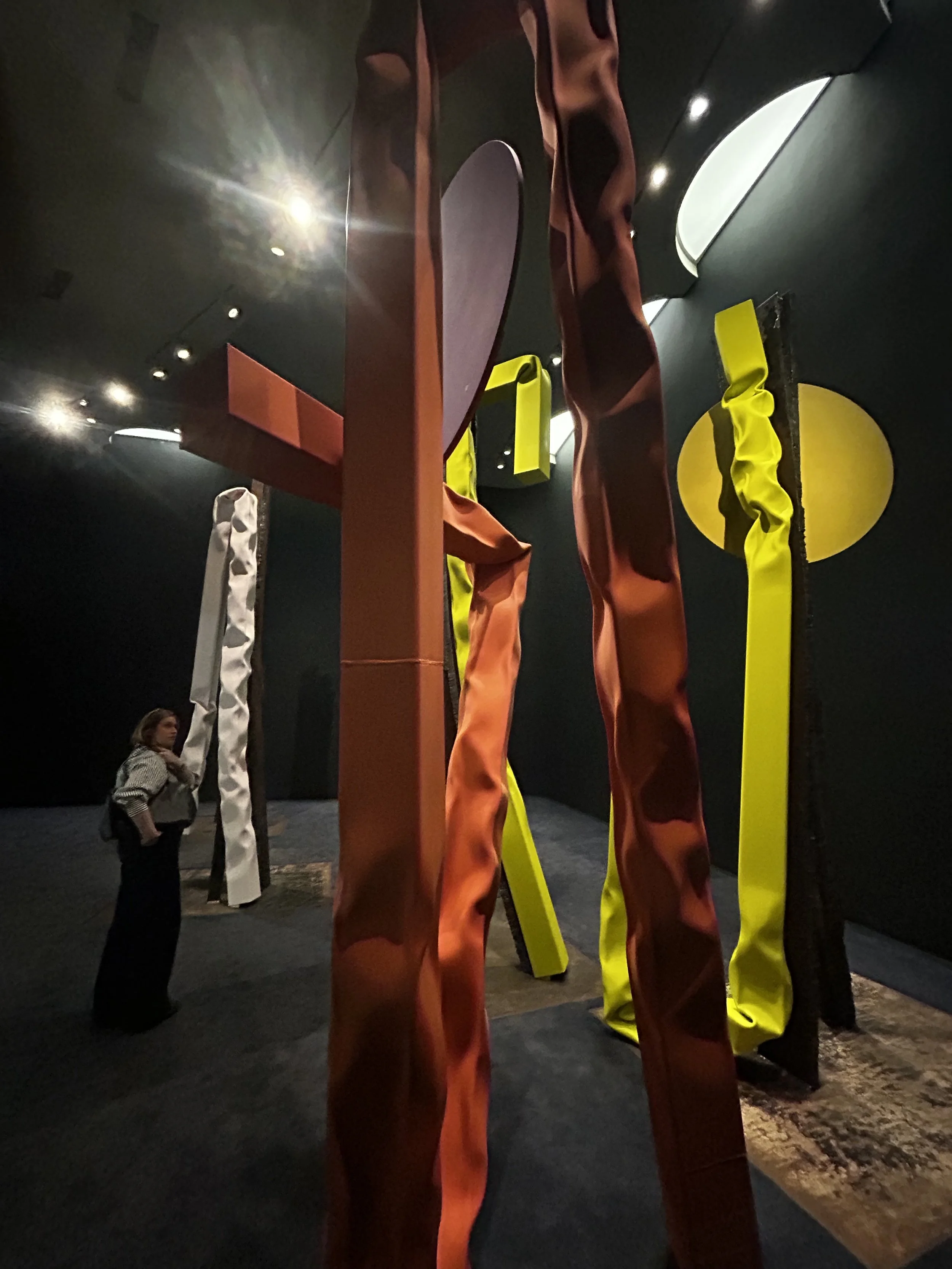
This alteration of our visual awareness bleeds into the physical compound of the museum’s space. The Guggenheim’s rotunda, whose initial construct as a ‘temple of spirit’ was conceived by its first director, Hilla Rebay, and architect, Frank Lloyd Wright, comes to consecrate Bove’s intention of emphasizing the relationships between objects and their surroundings. Bove’s work is not to be read as individual pieces, simply placed within the museum, but instead, there is an ask to examine the space that these works envelop around. In their own way, they expand and warp to form new spaces that the museum previously did not have. We are aimed with the objective to reconsider space as an empty vessel, but instead to see it as a supporting enclave that renders a finished work of art with meaning.
“The resonance of art and architecture is forged through Bove’s works, whose creations are in a constant state of transformation. In this process, the physical space becomes a sculpture in itself.”
It is to be considered and speculated upon, with its geometries and lines reformed, allowing new visual connections that span across all levels. These connections are forged not only in Bove’s own work, but through the passage of the sloping ramp, there is an engagement between Bove’s and those of previous artists as kindling inspiration. In this structure, not only is there a physical overlapping between space and artwork, but there is an overlapping of history and the unspoken languages of visual forms across time, that continue to build and support artists of our contemporary.
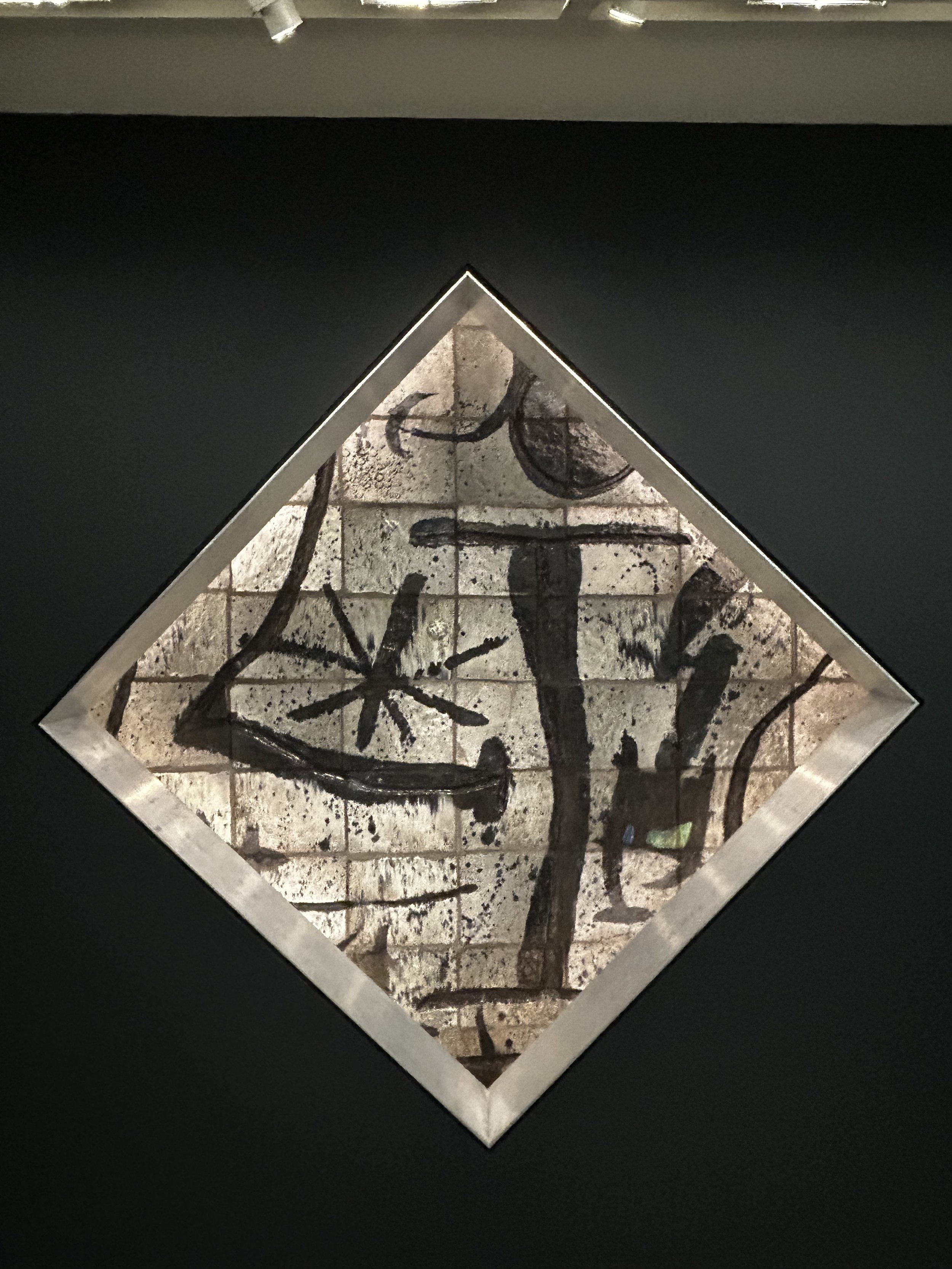
Bove treats the museum’s physical structure as a malleable canvas, transforming it into a finished object. Upon entering the first level, viewers encounter a diamond-shaped opening in the museum’s wall. This aperture reveals choreographed lines of black strokes with primary color accents. The ceramic mural, created by Joan Miró and ceramicist Josep Llorens Artigas in 1967, was commissioned by the then president of the Solomon R. Guggenheim Foundation to honor his late wife, Alicia Patterson Guggenheim. Bove exposes the museum’s physical anatomy, unveiling a history previously concealed behind the wall. This new window, together with the newly visible artwork, integrates with the entire exhibition and becomes one of Bove’s contemplative pieces. She anchors and positions the diamond-shaped form, which recurs throughout the exhibition, to echo rhythmically the other geometric structures within the reimagined museum space. Through this approach, Bove intensifies the historical layers embedded in the surrounding walls. This act establishes a dialogue with past artists, including Miró, whose practices have influenced her own. As viewers progress through the exhibition, time—both past and present—emerges as an artistic tool that Bove reveals and employs as a flexible medium for creation.
“She anchors and positions the diamond-shaped form, which recurs throughout the exhibition, to echo rhythmically the other geometric structures within the reimagined museum space. Through this approach, Bove intensifies the historical layers embedded in the surrounding walls. ”
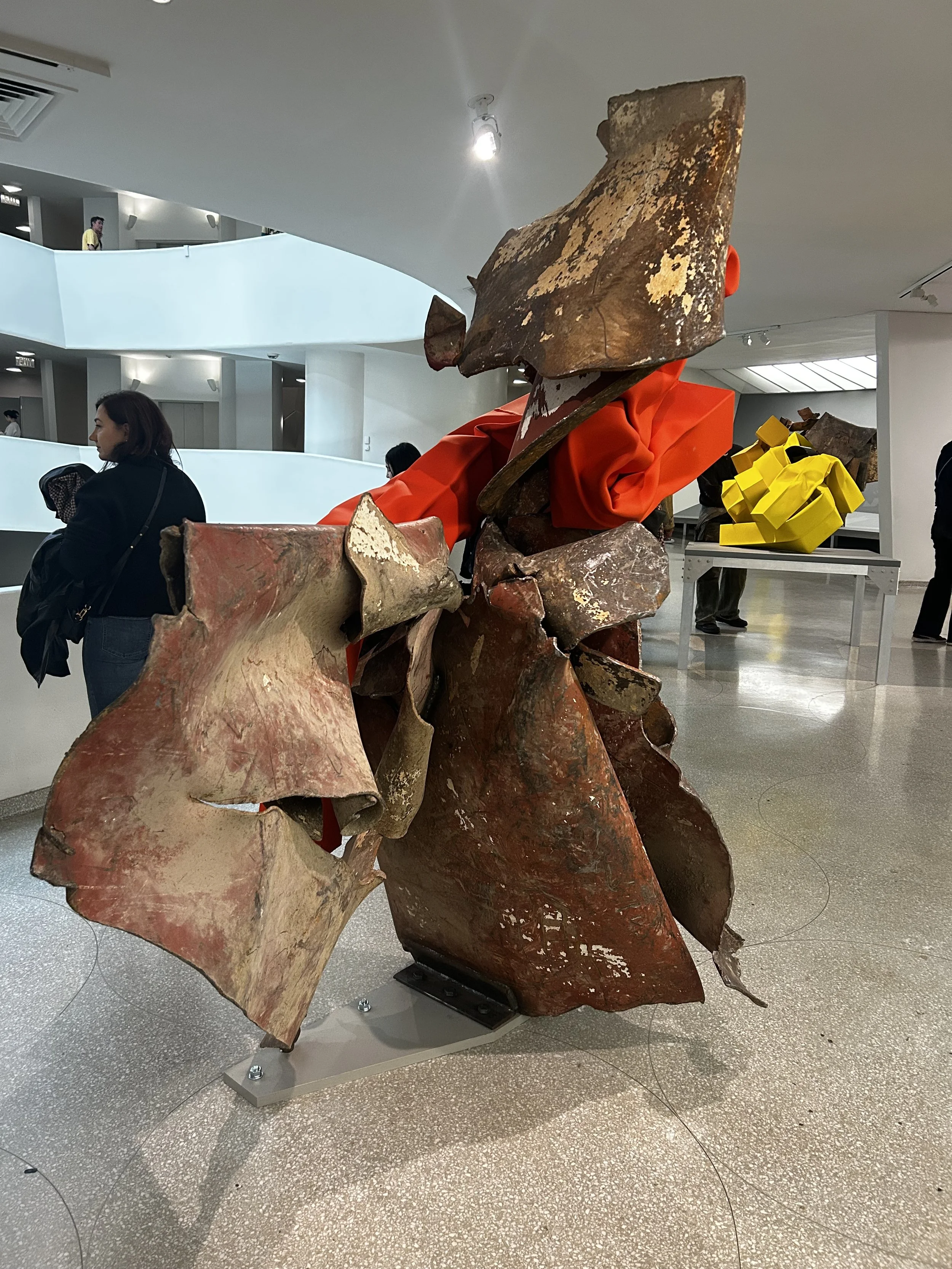
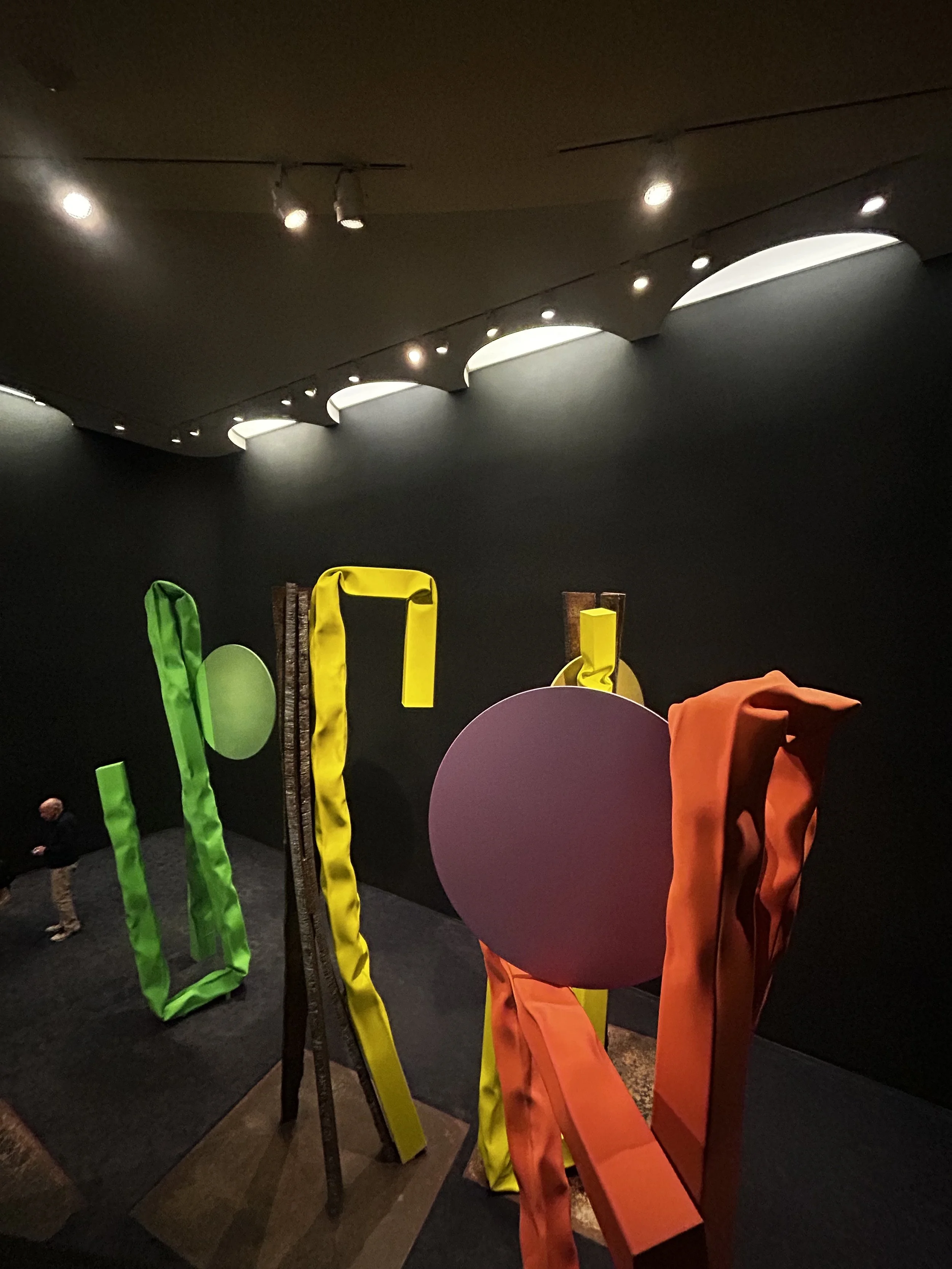
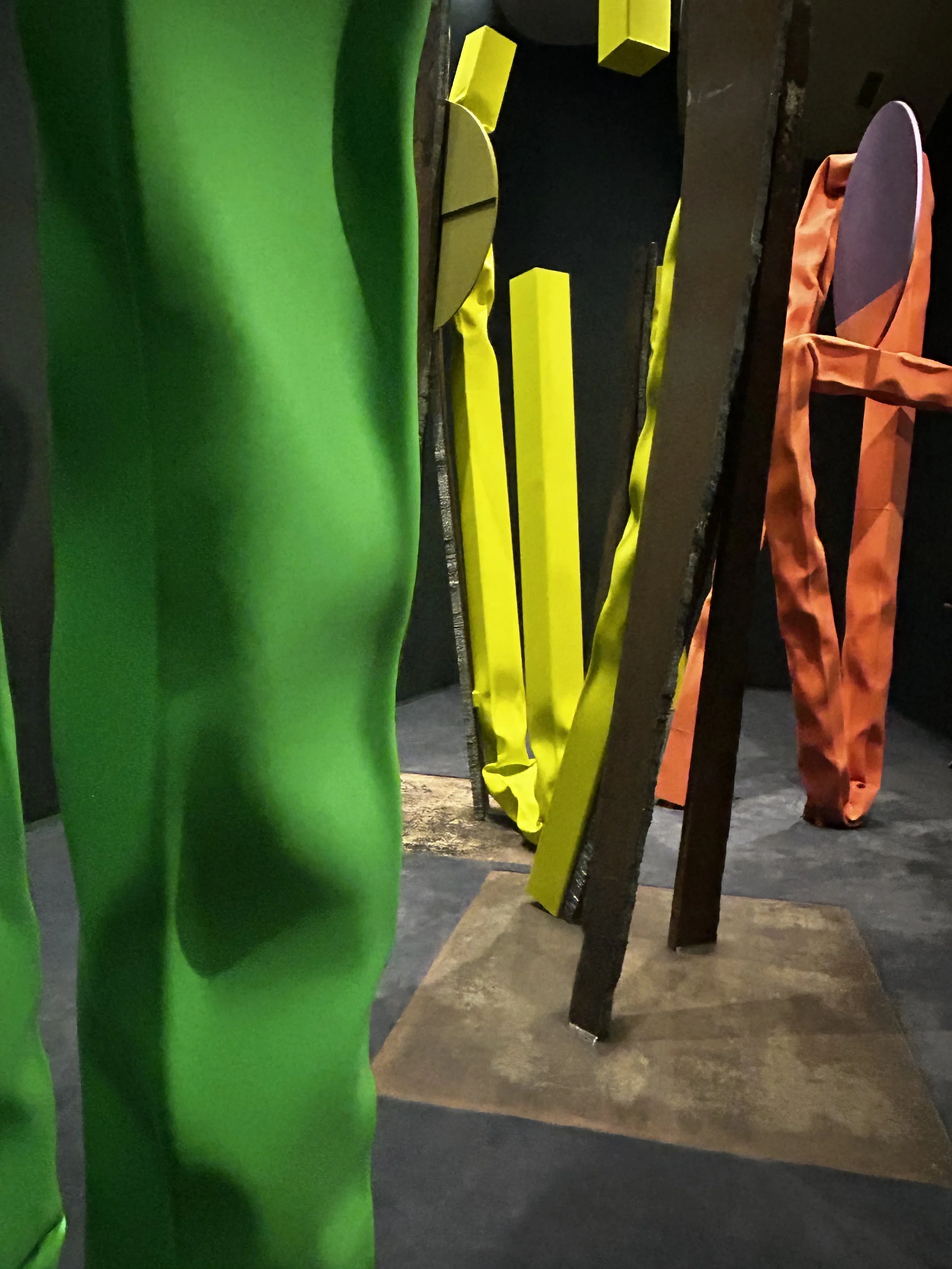
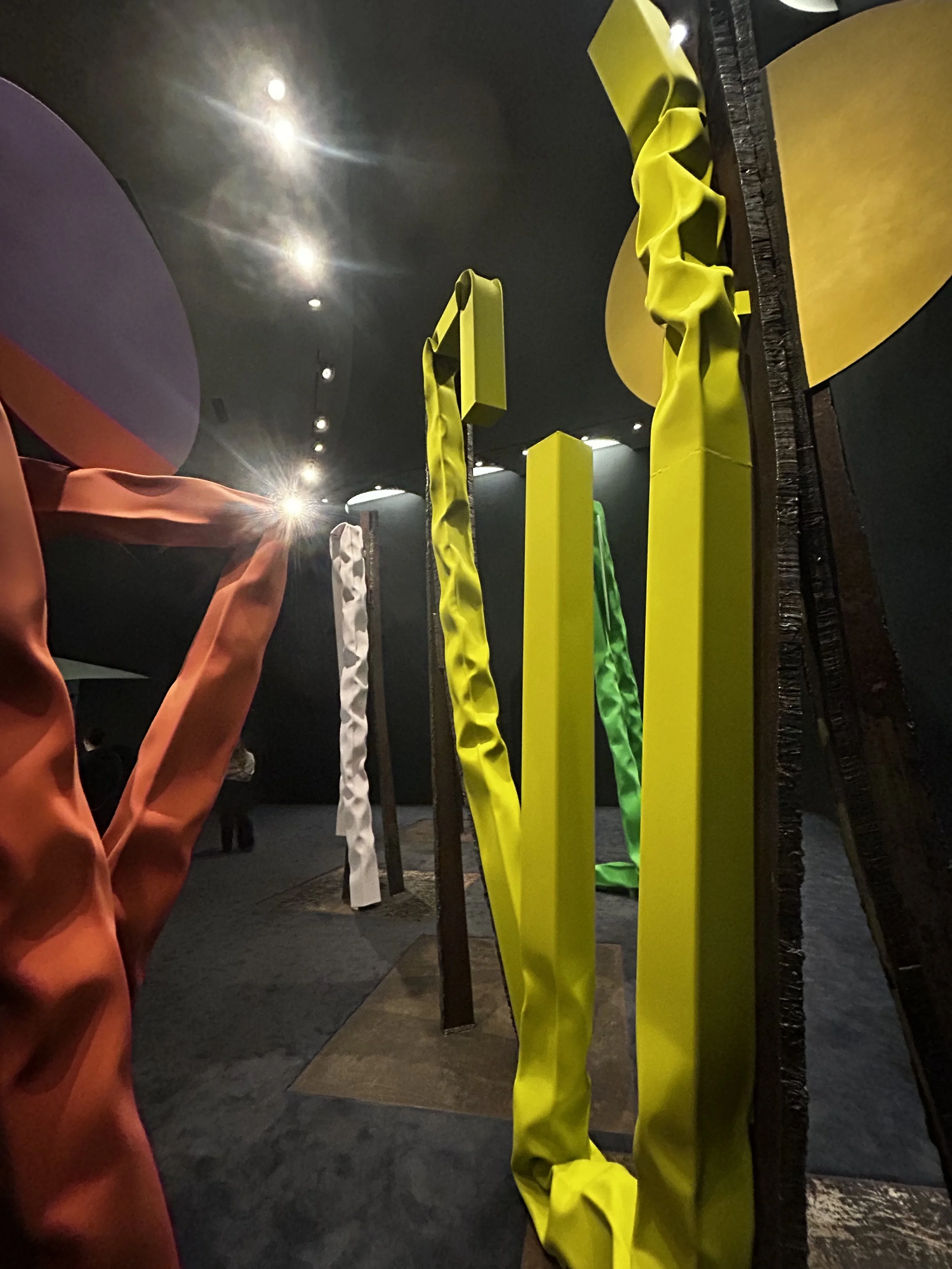
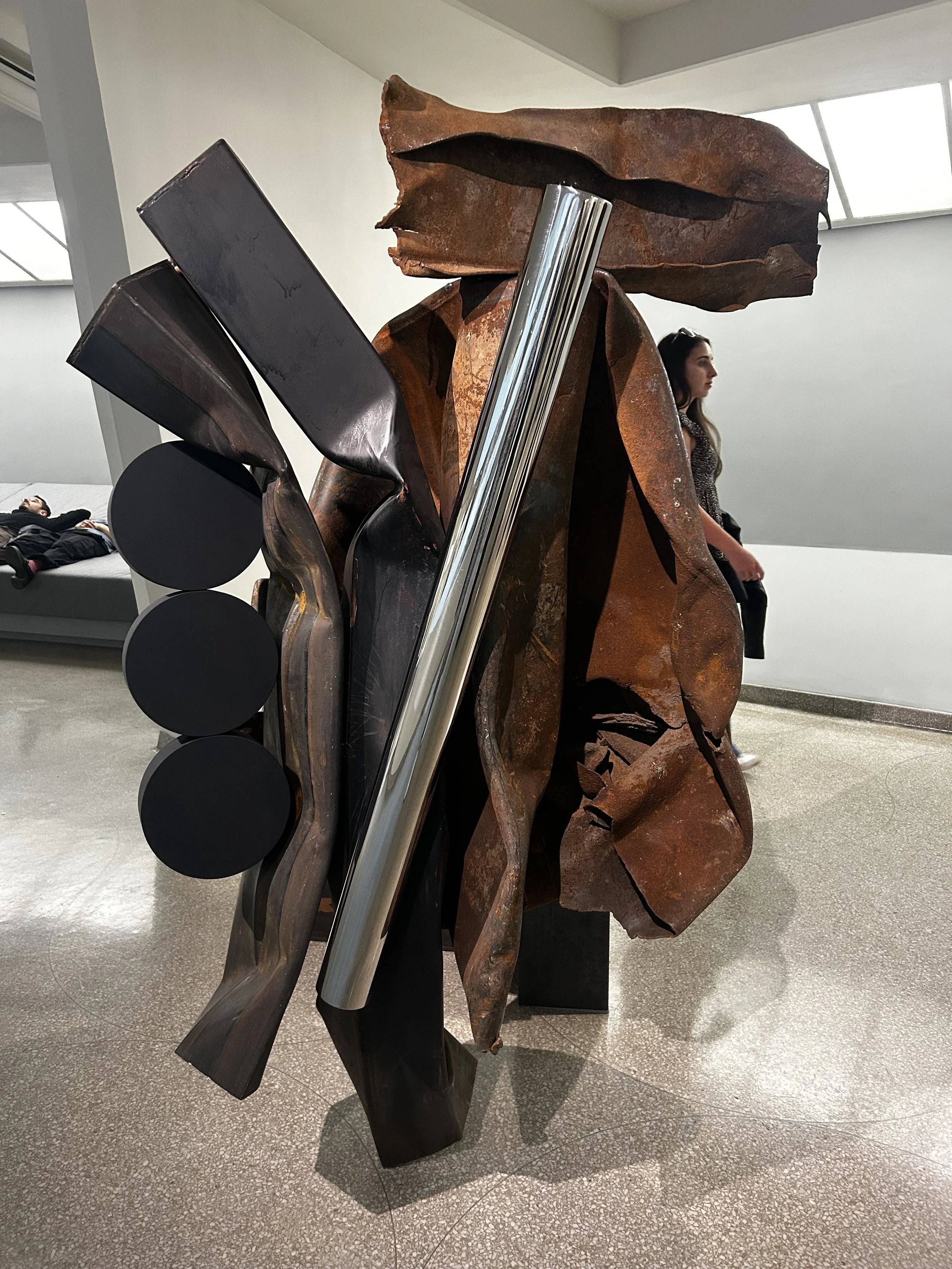
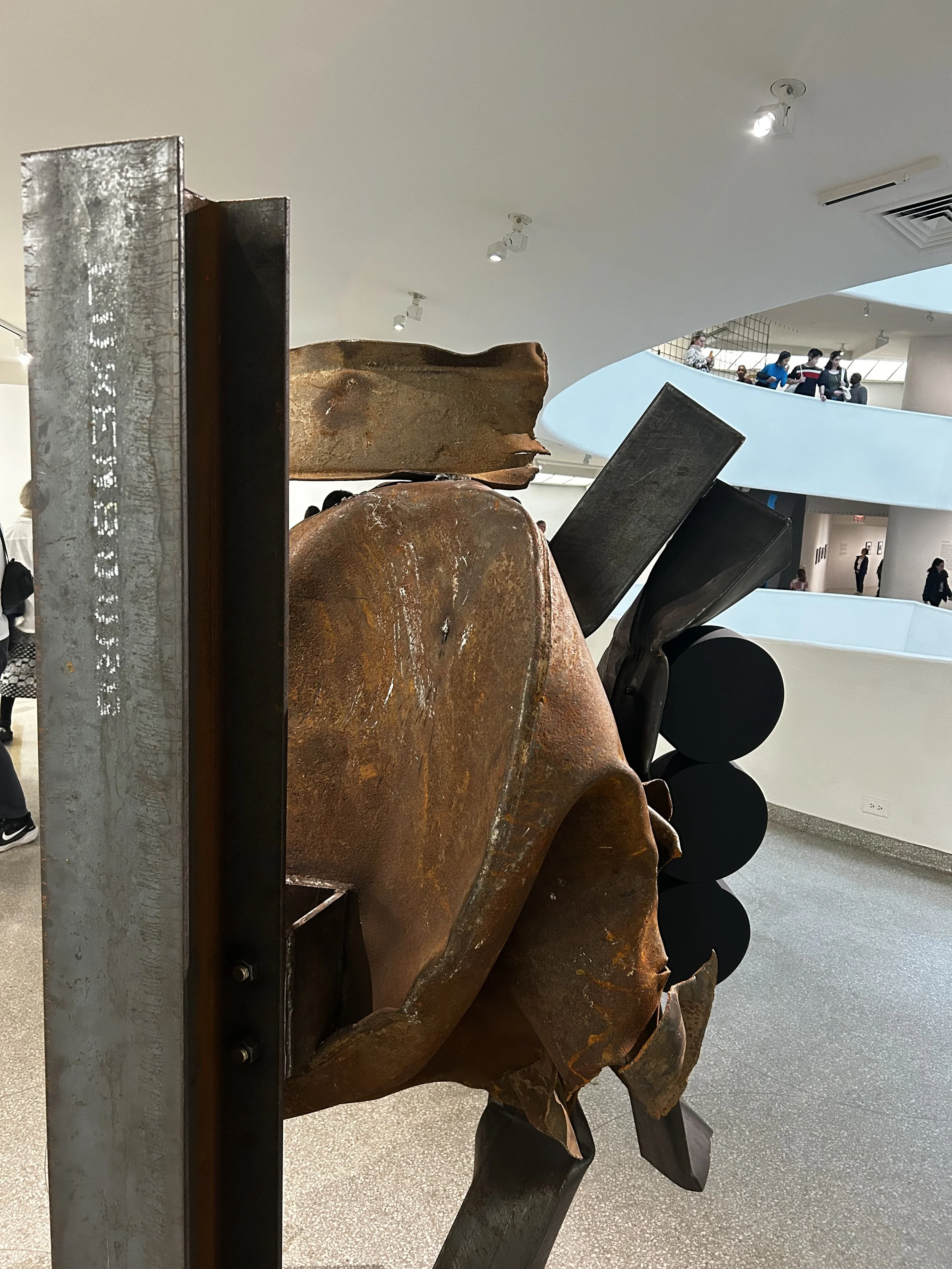
Across soaring totem-like pillars and constructed forms of intertwined steel, central to Bove’s survey of work is the act of seeing. Observing becomes not simply seeing what is presented to us, but an act of contemplation and reconsideration of the many ways of seeing the world around us. Through surface textures and colors, viewers are asked to remember the familiarity of material and how it is traditionally experienced, but then come to ask how it can be different or altered. With her work, ‘Shewolf,’ alongside a title suggesting action and charged movement, the steel sculpture material appears to possess great mass. Bove reconsiders the material’s malleability through the process of contorting folds, while also preserving the appearance of immense weight to the steel.
“Bove goes on to explain, “I think the way I put power into the work is balanced in terms of my will to act on the material and my receptivity to its inherent qualities.””
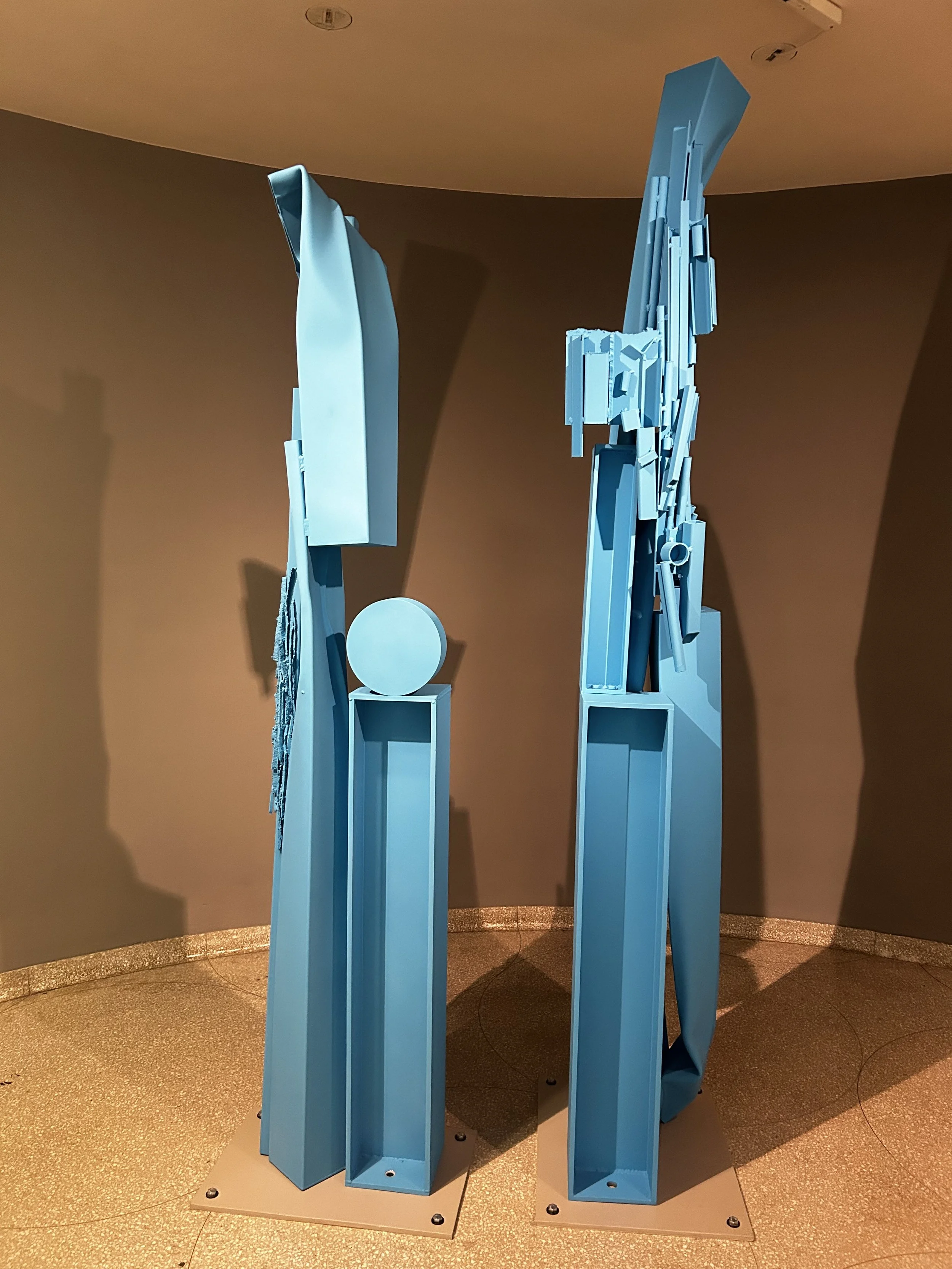
This concept can also be seen in her work, ‘Sweet Charity.’ The high-reaching sculpture pillars have been transfigured through restructuring their surface so the eyes see a soft and light material, instead of the dense steel plates that have been manipulated to form seemingly airy forms. In this, forms are imbued with movement, as we see the steel swim and dance upwards within the double-height gallery they occupy. The work itself is an extension of her works from a 2017 piece that referenced the seven Pleiades of Greek mythology, and the piece’s name is also a reference to Bob Fosse’s 1969 film of the same name, which is told through stylized choreography. For Bove, alongside time as inspiration, the act of seeing is something that can be altered and gives new possibilities of what is being seen and how the world is observed. Bove’s survey invites the act of reconsidering our own visual perception and seeing the endless possibilities in what can be.
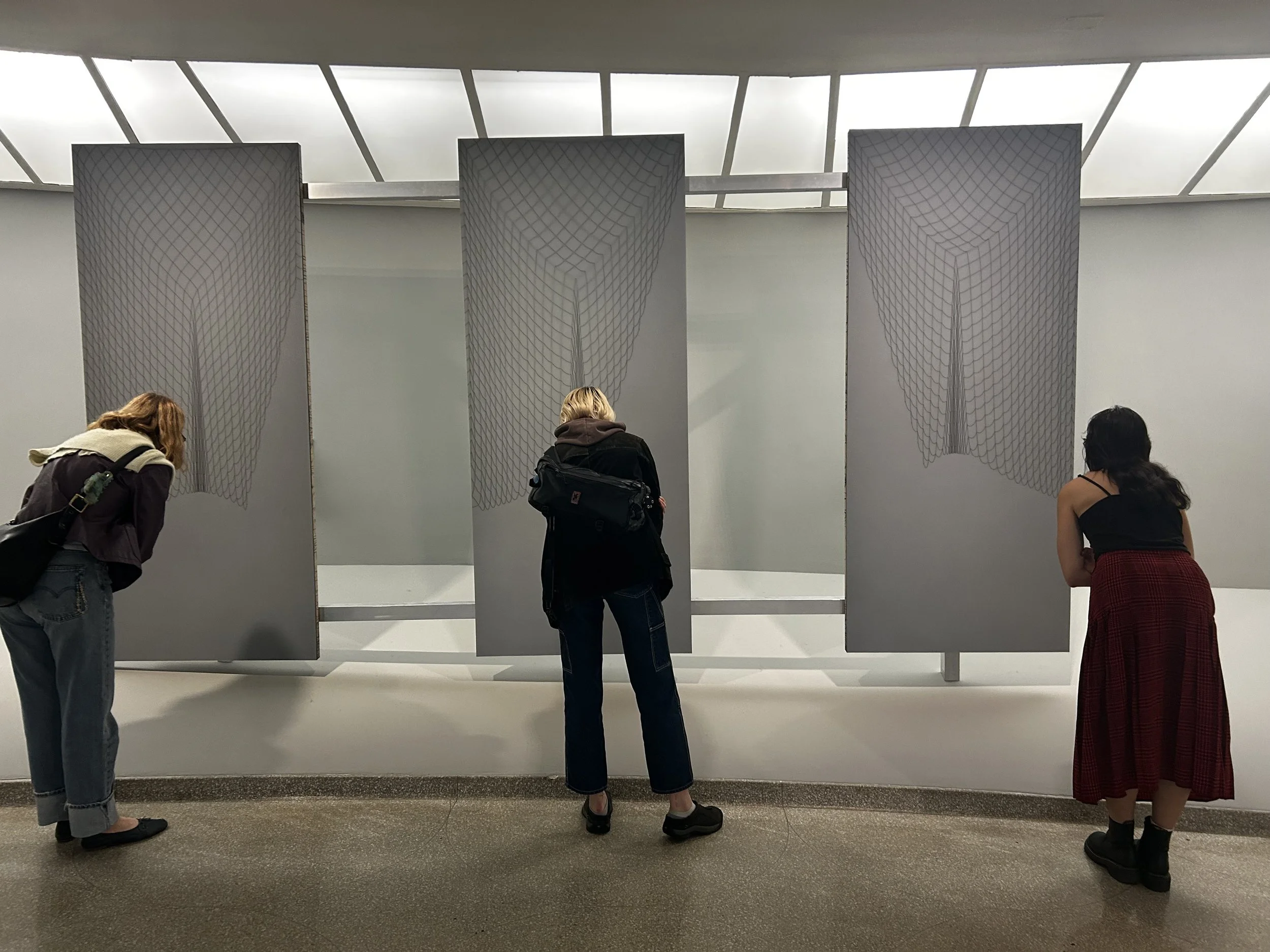
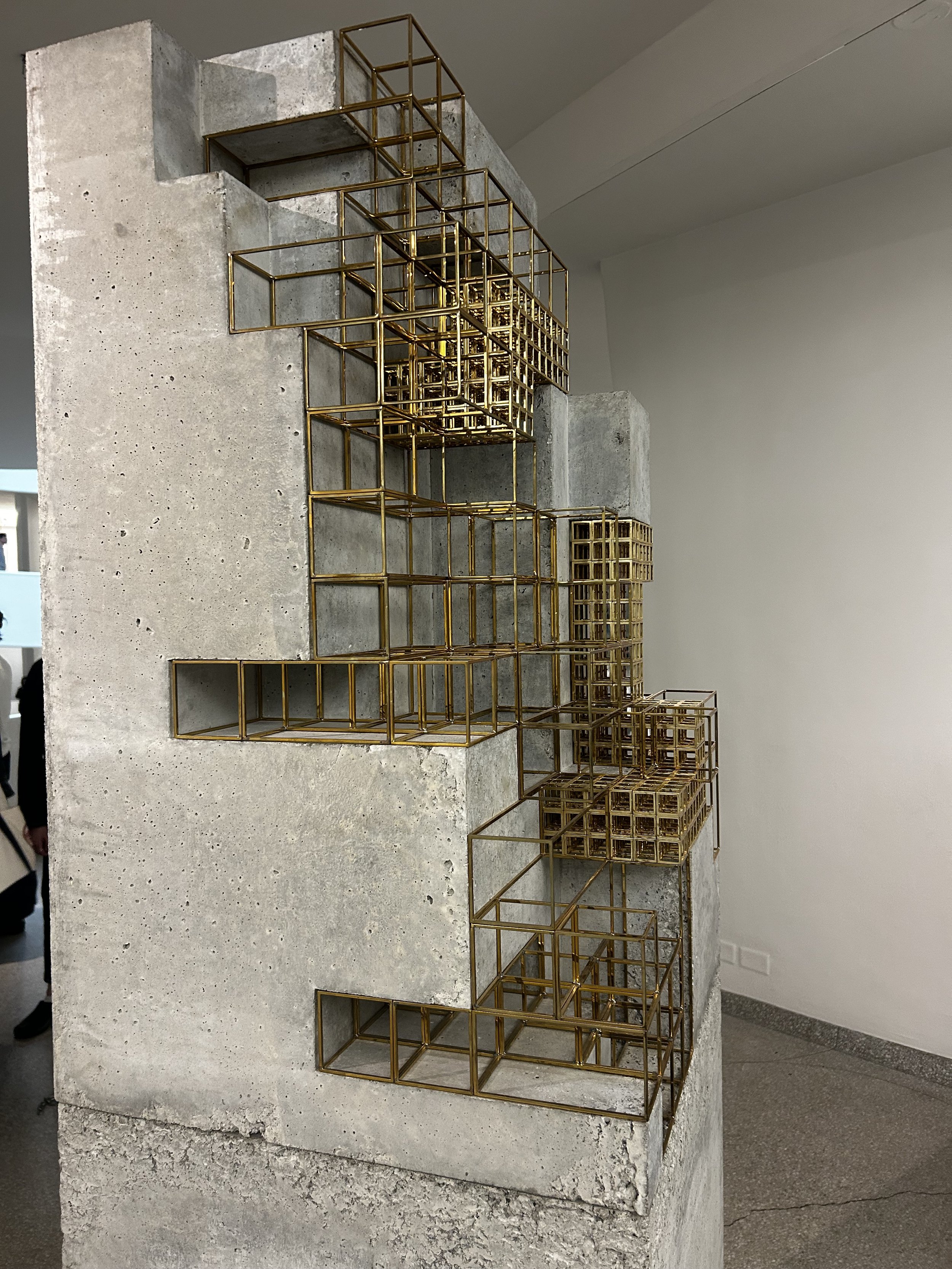
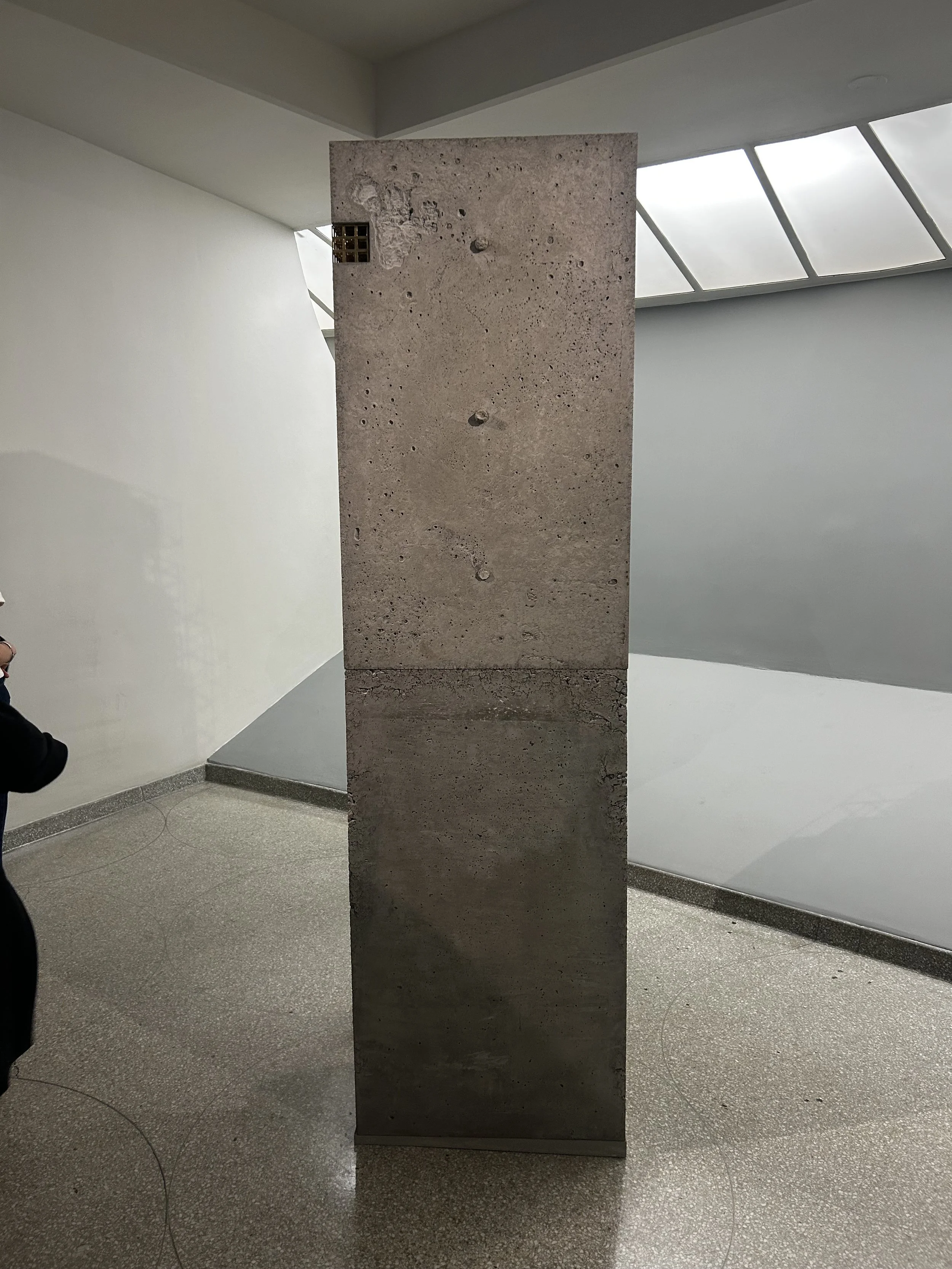
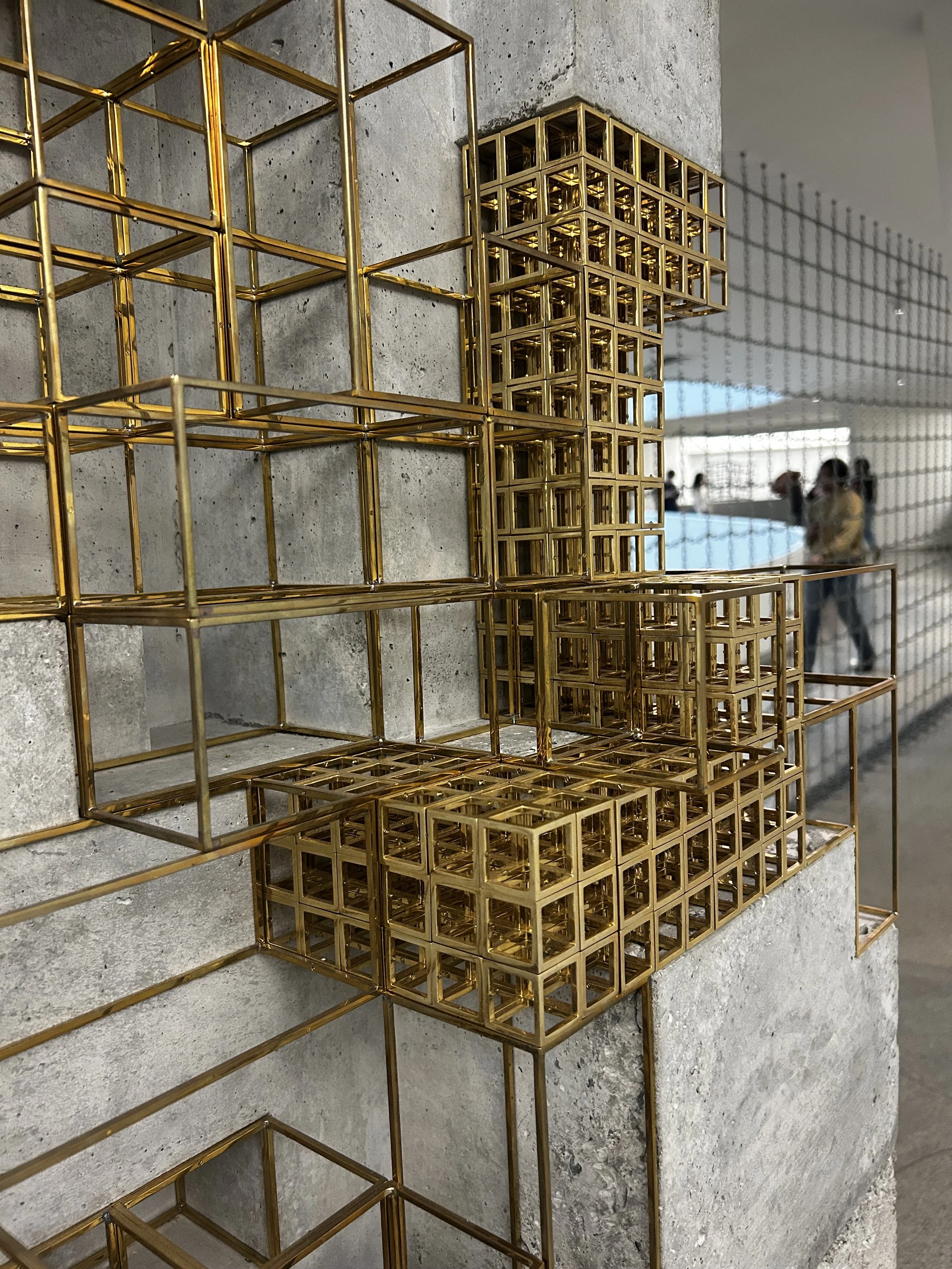
As Bove attests, “there is a contingent relationship between space and thing. They condition each other, so that the thing becomes more like an imagined thing.” Through transforming space and object, Bove transports her viewers into a created realm of new thoughts and transcending ideas of what may be in the everyday. In a communion of both space and object, Bove constructs physical connections of her work and its history. This survey becomes an assemblage of collages.
“The physical architecture of the museum extends Bove’s sequences of created environments. Her works exist alongside past artists, creating physical connections across history and time. ”
Bove transforms techniques in art practice and her mastery of transfiguring what is visible into something endlessly possible. In this, senses and assumptions are disrupted as varying possibilities are presented. There is a transformation of what is visible through gestures, fragments, and forms that are investigated. As Bove collages together not just material, but art historical references, she highlights curation as an art practice. She absorbs and utilizes art historical references, forming direct relationships between past and present. Through these direct connections, Bove goes on to re-conceptualize art history through a contemporary lens.
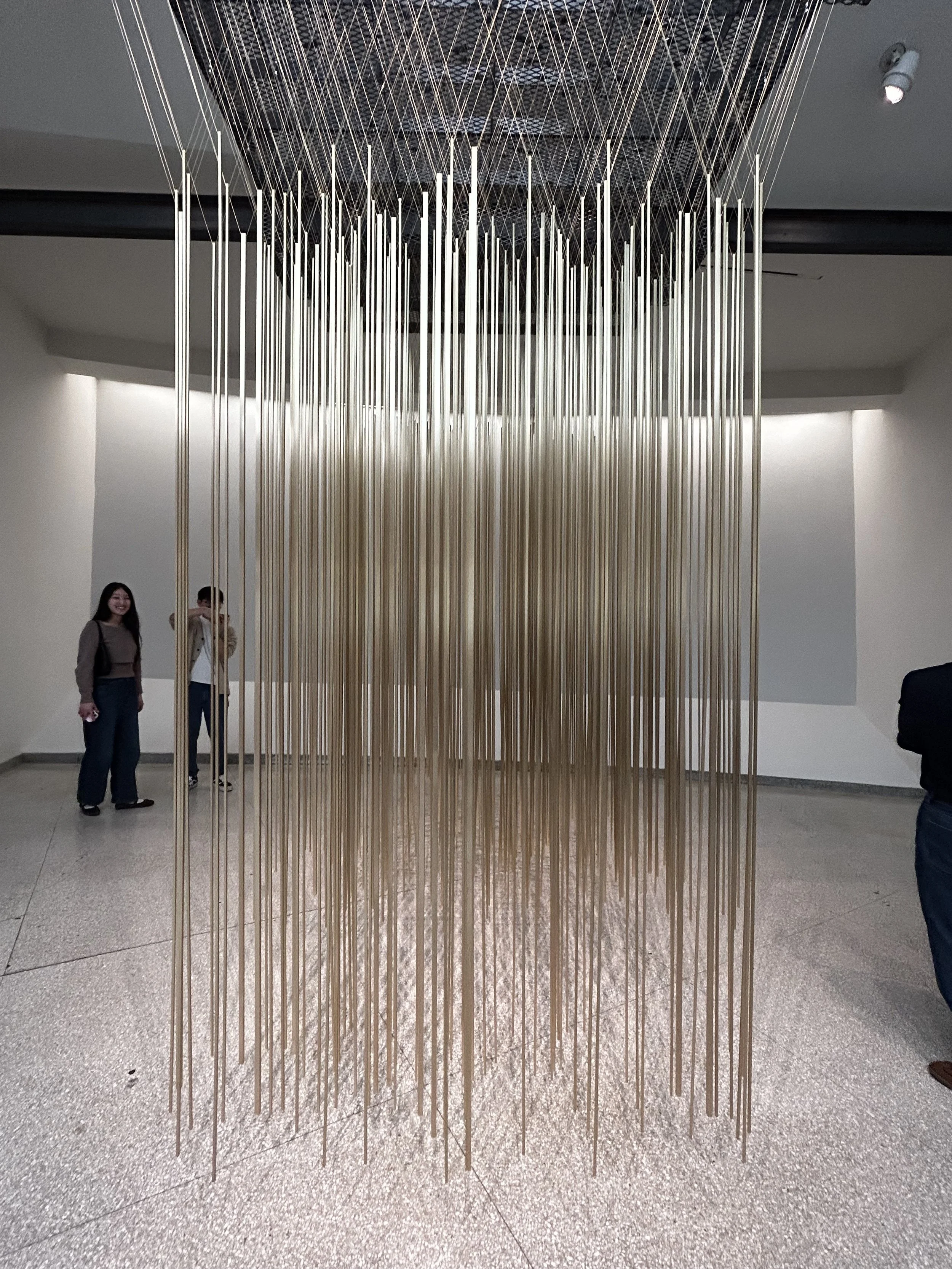
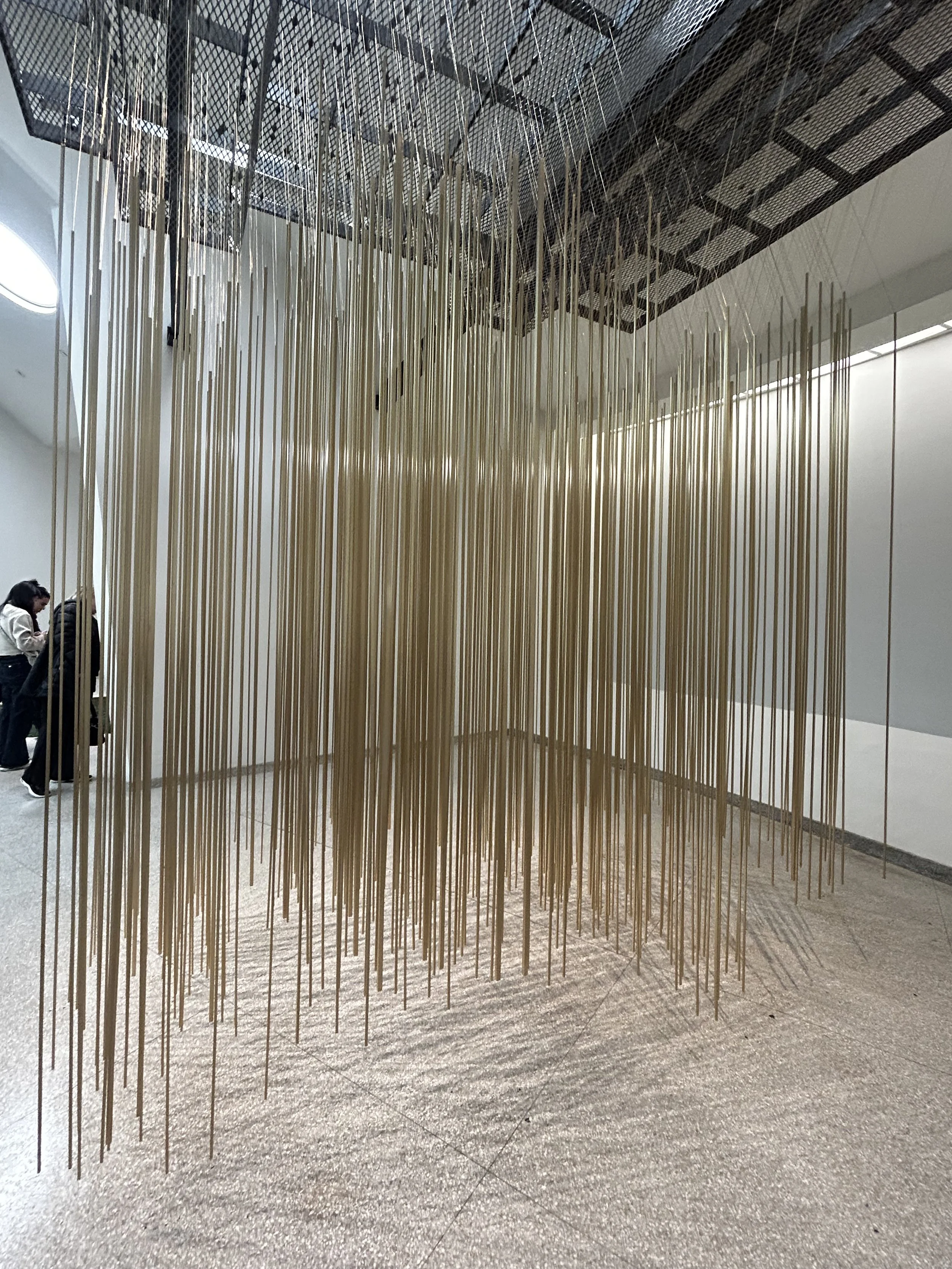
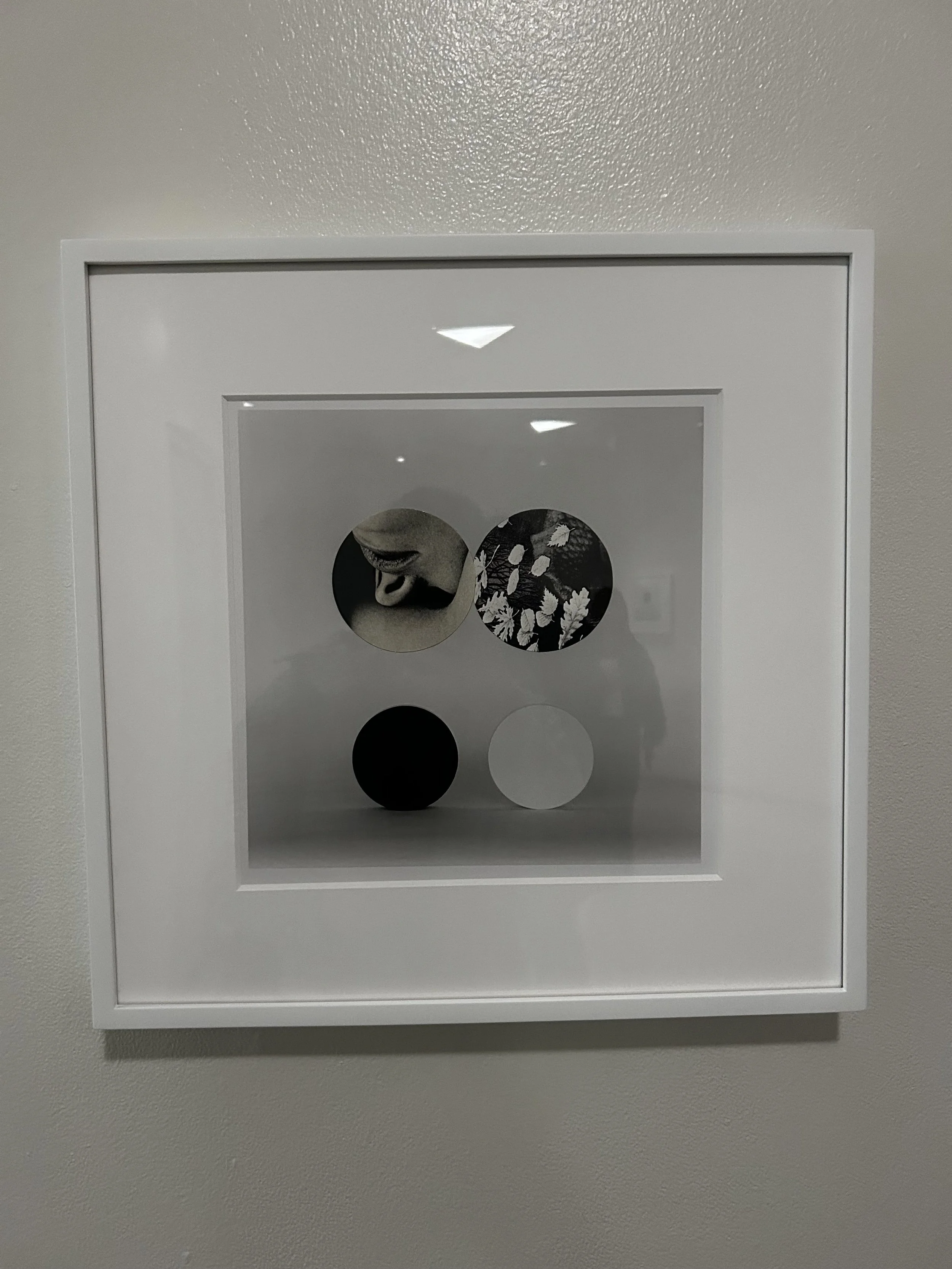
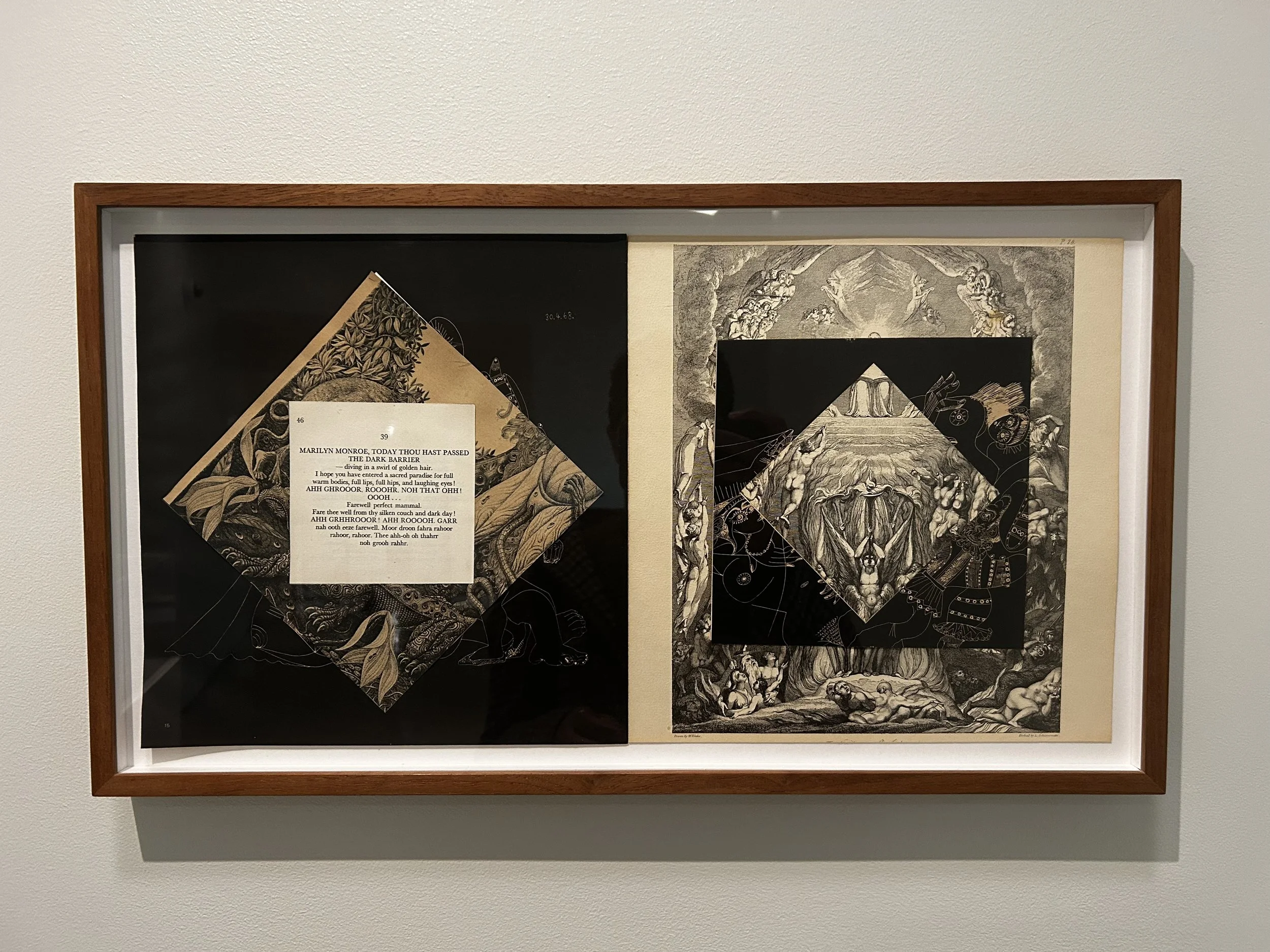
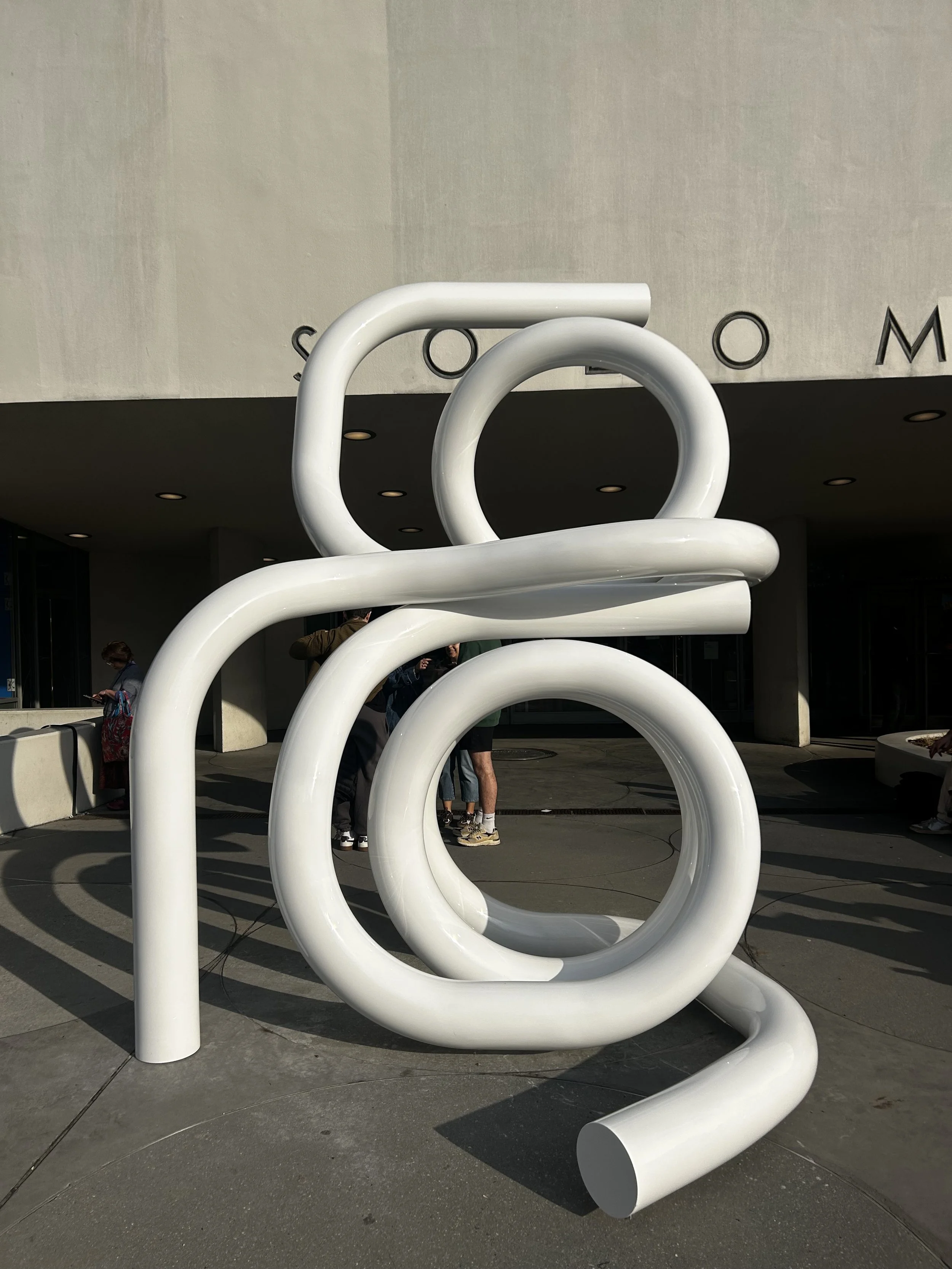
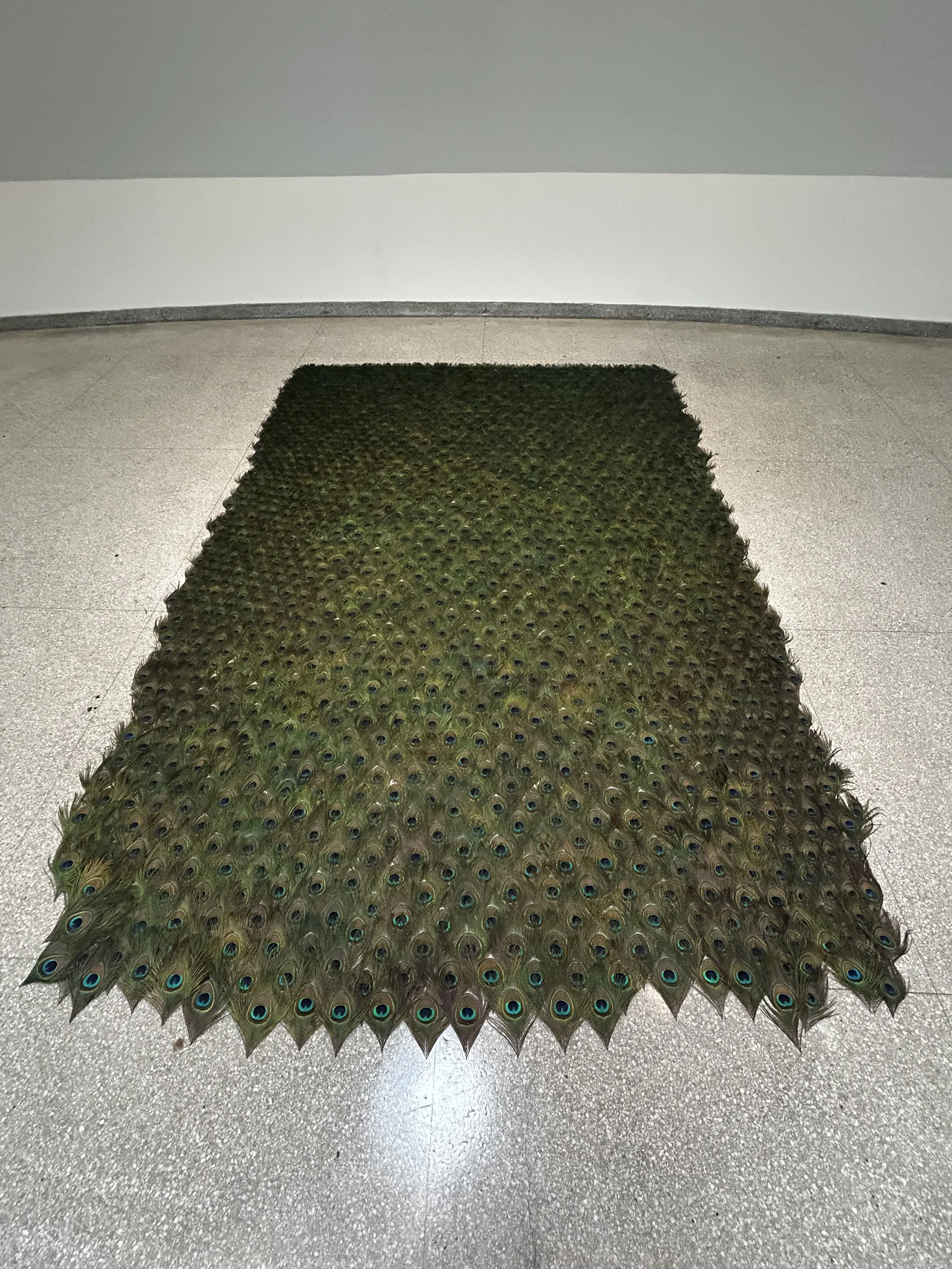
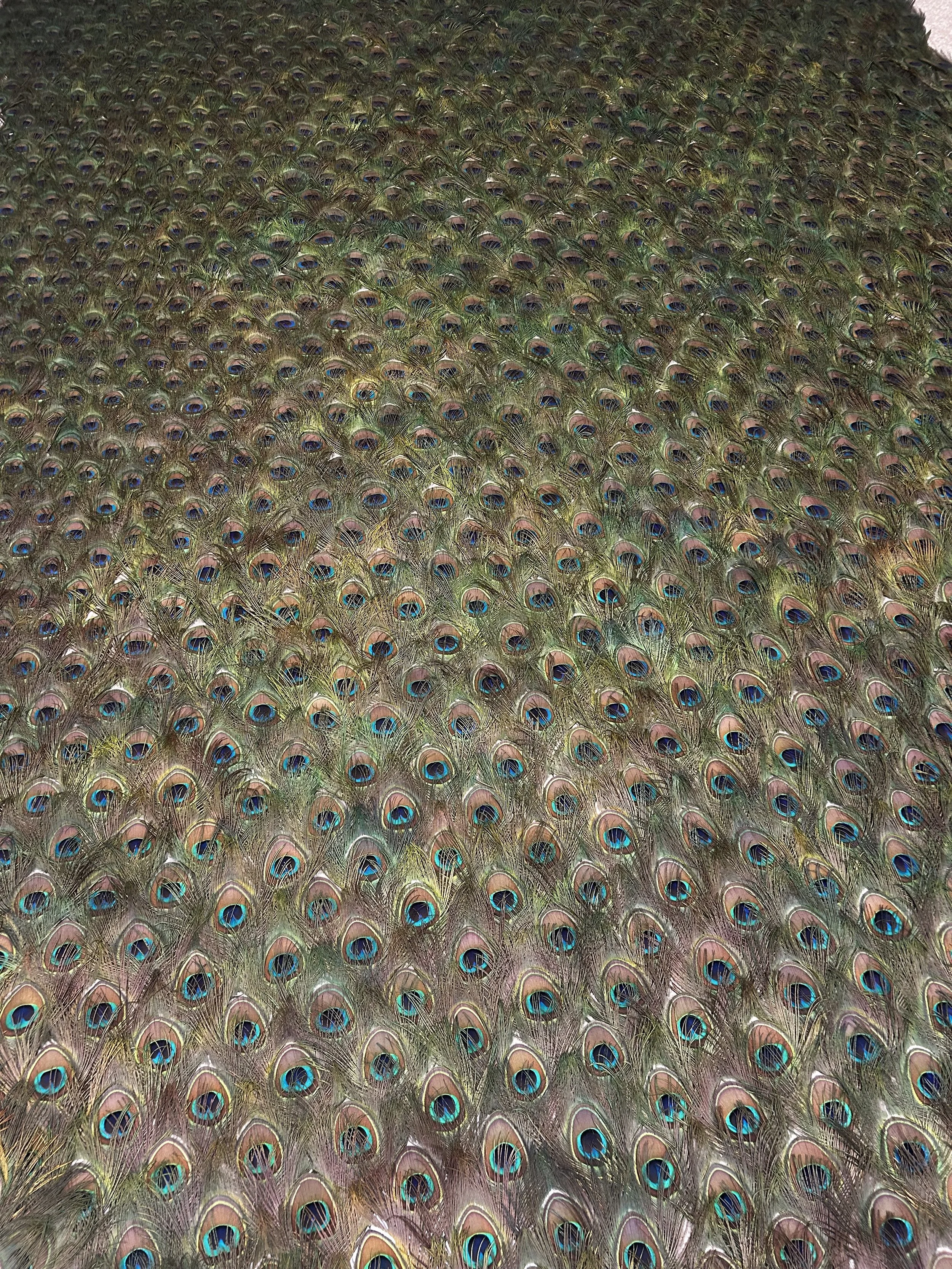
As the Guggenheim Museum continues to re-envision the innate possibilities of art, Bove’s 2026 survey attests to this by creating imaginative renderings of what the world can contain. Through this, we begin to see the world around us differently. As visitors enter the Guggenheim’s sprawling walkway, the museum asks them not to enter with predetermined understandings, but to maneuver through the limits of their imagination on what is possible in art. Amongst the male-dominated field of sculptors, Bove’s historical achievements are a testament to her history and skills. It is not common to find a survey of this magnitude exhibited by a female sculptor. In her ongoing success, Bove illustrates the possibility of effecting change in cemented truths and expectations. As a woman, artist, sculptor, and creator, she has come to represent the range, and beyond, that a female artist can reach, through her constant experimentation and reconfiguration of the boundaries of abstraction and contemporary art forms. Bove’s works are an engrossing cavern of colors and shapes that guides viewers through an illustrated history across space and time. This journey breaks the notions of the everyday and reworks how the external world is transfixed within the internal, garnering forth new possibilities of what could be within its physical and created boundaries.
“As visitors enter the Guggenheim’s sprawling walkway, the museum asks them not to enter with predetermined understandings, but to maneuver through the limits of their imagination on what is possible in art.”
Resources on References:
Published May 13, 2026 | Women in the Arts, Inc. | Images by Osvaldo Martinez Abreu